Romford Greyhound Racing: Guide for Crayford Punters
Best Greyhound Betting Sites – Bet on Greyhounds in 2026
Loading...
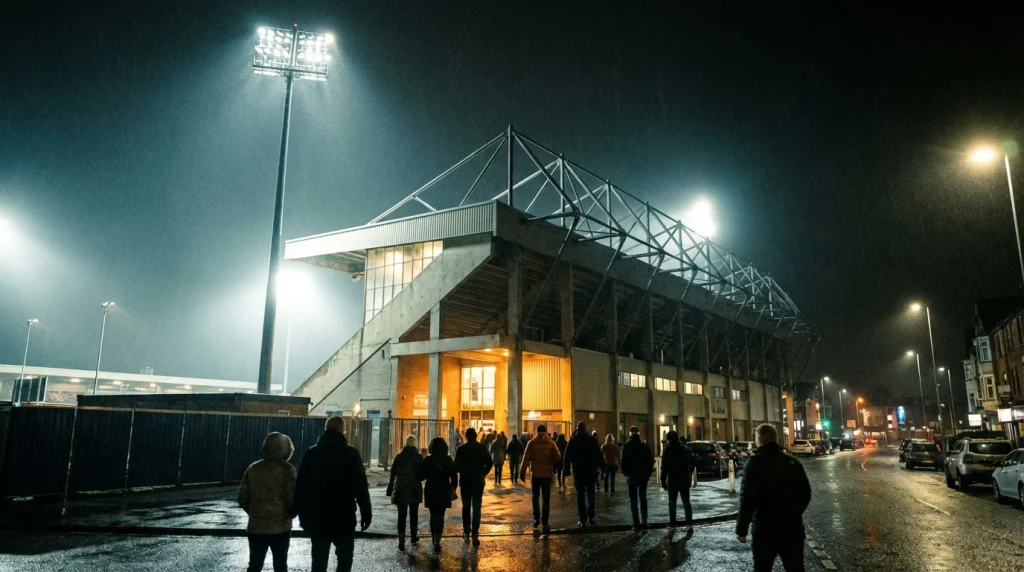
When Crayford closed in January 2025, the nearest licensed greyhound track to its former punters became Romford. Geographically, the shift is from south-east London to east London — roughly fifteen miles up the A13 corridor, or a forty-minute drive if the traffic cooperates. In racing terms, the shift is larger. Romford is a different track with different dimensions, different distances, different trap biases and a different racing character. Form knowledge from Crayford does not port across directly, and anyone who assumes it does will lose money learning the lesson.
That said, the analytical framework is the same. Trap draw matters. Early pace matters. Calculated times and going adjustments work the same way. The principles transfer even if the specific numbers do not. What follows is a practical guide to Romford for punters whose habits and knowledge were built at Crayford — what to expect, what to adjust, and where the two tracks diverge most sharply.
Track Specs: Romford vs Crayford
Romford’s circuit measures approximately 350 metres in circumference, compared to Crayford’s 334. That extra 16 metres makes a material difference. The bends are wider, the straights are longer, and the run to the first bend gives dogs noticeably more time to settle into stride before the opening turn. Where Crayford’s 77-metre run compressed the field into immediate contact, Romford’s longer approach allows the pack to spread slightly, reducing (though not eliminating) the first-bend congestion that defined so much of Crayford’s racing.
Romford is a left-handed track — dogs run clockwise — whereas Crayford was right-handed. This is not just a cosmetic difference. Dogs have directional preferences, and a greyhound that railed comfortably on a right-handed circuit may not rail as naturally going the other way. Trainers moving dogs from Crayford to Romford sometimes needed a transition period while the greyhound adjusted its running line. Some dogs adapted quickly; others never fully settled on the opposite configuration.
The surface at Romford is sand, as at Crayford, but the maintenance regimes, drainage characteristics, and typical going conditions differ between venues. A going of +10 at Romford does not produce the same effect as +10 at Crayford, because the baseline surface speed and composition are different. This is a common trap for punters who treat going figures as universally comparable. They are track-specific and should be interpreted only against the same venue’s standard.
Romford is operated under the Coral brand within the Entain group — the same corporate parent that ran Crayford. The management and commercial infrastructure are broadly similar, but the racing programme and grading are independent. A dog graded A3 at Crayford would not automatically be graded A3 at Romford; its grade would be reassessed based on trial times and performances at the new venue.
Distances and Trap Stats
Romford’s race distances differ from Crayford’s. The standard distances at Romford include 225 metres for sprints, 400 metres for the standard trip, and 575 metres for middle distance. These are shorter across the board than Crayford’s equivalent trips (238m sprint, 415m standard, 592m middle), reflecting the different circumference and start/finish positions at the two tracks.
The trap-draw dynamics at Romford also differ. At Crayford, trap 4 held a persistent statistical advantage, driven by the short run to the first bend and the right-handed configuration. Romford’s left-handed layout and longer run-up produce a different bias profile. The inside traps — particularly trap 1 — tend to perform well because the extra distance to the first bend gives the rail runner time to establish position without being crowded. The middle and outside traps are more competitive at Romford than they were at Crayford, because the wider bends reduce the geometric penalty for running wide.
Punters who relied on Crayford’s trap data need to recalibrate from scratch. The specific trap advantage percentages at Romford should be studied in their own right, using Romford’s own results data rather than extrapolating from Crayford’s patterns. The principle — that trap draw creates measurable bias — transfers. The numbers do not.
The distance difference between 415m at Crayford and 400m at Romford also affects form comparison. A dog’s calculated time over 415m at Crayford cannot be directly compared to its calculated time over 400m at Romford. The distances are different, the track dimensions are different, and the going baselines are different. Any attempt to compare form across the two tracks must account for all three variables, which in practice means treating Romford performances as a separate form line rather than a continuation of the Crayford record.
Schedule and Streaming Access
Romford runs a regular racing programme that includes both evening and daytime BAGS meetings. The typical schedule features multiple meetings per week, providing frequent opportunities for punters who want consistent racing to follow. Evening meetings tend to feature higher-graded cards with stronger fields, while the BAGS sessions offer a larger volume of races at mixed grades throughout the day.
Live streaming of Romford races is available through most major UK bookmakers. The SIS feed covers BAGS meetings, and selected evening cards are available through Sky Sports Racing or directly via bookmaker platforms. The streaming access is broadly equivalent to what was available for Crayford: a funded account with a licensed bookmaker is typically sufficient to watch any Romford race live.
Romford also offers an in-person experience that Crayford’s closure has made more relevant to its former regulars. The stadium is accessible by public transport — Romford railway station is within walking distance — and hosts trackside dining, bar facilities and the usual bookmaker pitches. For punters who valued the live atmosphere at Crayford, Romford provides the nearest comparable experience in the London area.
One practical note: Romford’s evening meetings can be busy, and parking near the stadium fills quickly. Midweek evenings are more manageable than Friday or Saturday cards. For those watching from home, the schedule is published in advance on the GBGB website and through individual bookmaker racecards, allowing forward planning for both attendance and betting.
Adjusting Your Form Reading
The biggest adjustment for ex-Crayford punters is resisting the urge to apply Crayford patterns to Romford data. The two tracks share a sport but not a form book. A dog that was a reliable trap 4 winner at Crayford is not automatically a strong prospect from trap 4 at Romford. Its running style may still favour a middle draw, but the specific dynamics — the longer run to the bend, the left-handed turns, the wider circumference — alter how that advantage plays out.
Start by building a new baseline. Watch twenty or thirty Romford races without betting, noting how the bends unfold, where the trouble spots are, and which traps produce consistent leaders at each distance. Track the split times and match them against finishing positions to establish how predictive early pace is at this specific venue. At Crayford, the first-bend leader won a high percentage of races. At Romford, the figure may be different — not necessarily lower, but different enough to require its own data set before you can bet with confidence.
Pay particular attention to the wider bends. At Crayford, tight turns punished wide runners harshly because the extra ground per bend was proportionally larger on a 334-metre circuit. Romford’s 380-metre circumference produces gentler curves, and the penalty for running wide is less severe. Wide runners that consistently lost ground at Crayford may find Romford more forgiving — and their form might improve simply because the track suits their style better.
The grading adjustment period is also worth monitoring. Dogs transferred from Crayford to Romford (or any other track) go through an assessment process. Their initial grades at the new venue may not accurately reflect their ability, because the racing manager is working with limited information — trial times and a form record from a different track. Early runs at the new venue often produce anomalous results as dog and grading system calibrate to each other. These early runs can create value for punters who understand the dog’s Crayford form and can assess whether the new grade is too high or too low.
A Different Track, the Same Discipline
Romford is not Crayford with a different postcode. It is a distinct venue with its own characteristics, and treating it otherwise is the fastest route to a depleted bankroll. But the discipline that produced results at Crayford — studying trap data, tracking split times, reading the racecard with care, waiting for the draw and the form to align before committing money — is exactly the same discipline that works at Romford. The homework starts over. The method does not.