Greyhound Racing Guide
Crayford Greyhound Results: The Definitive Track Guide, Race Data and Betting Analysis
 Available in US
Full history, trap statistics, betting strategy and where to find archived race data after the 2025 closure.
Crayford Greyhound Results: The Definitive Track Guide, Race Data and Betting Analysis
What Crayford Results Tell You That Raw Data Cannot
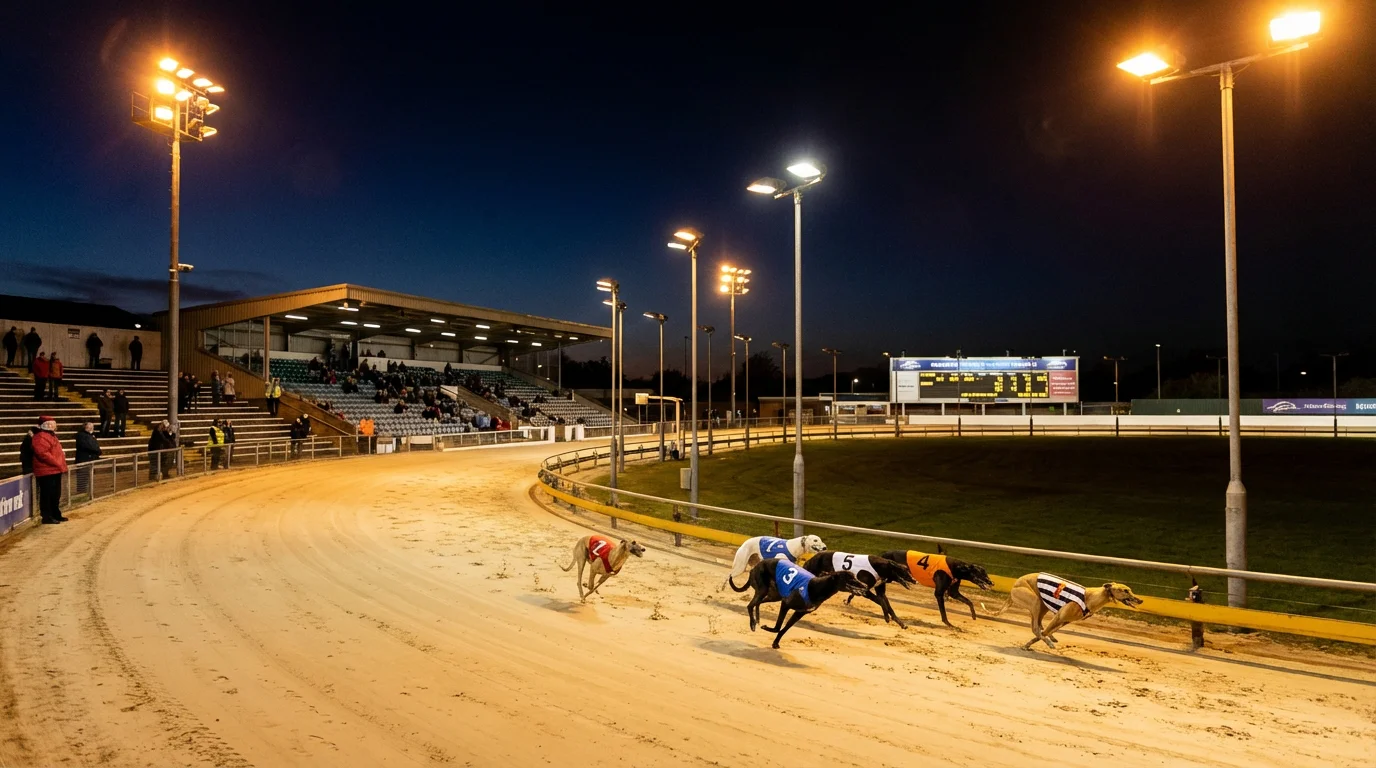
Crayford's 334-metre sand oval never forgave a slow starter. For nearly four decades, this tight, right-handed circuit in south-east London produced greyhound results that rewarded early pace, punished wide runners, and created a dataset unlike any other UK track. The stadium closed on 19 January 2025, but its results archive remains one of the richest resources available to anyone serious about understanding how track geometry, trap draws and going conditions shape race outcomes in British greyhound racing.
Most results pages give you a finishing order, a time, and a trap number. That is the equivalent of reading a football score without knowing which team had possession. Crayford greyhound results, properly read, reveal sectional splits, calculated times adjusted for going, bend positions at every turn, and remarks that compress an entire race narrative into a handful of abbreviations. A dog that posted 23.54 seconds over 380 metres at Crayford was telling you something very different from one that clocked the same raw time at Romford or Hove, because Crayford's short 77-metre run to the first bend and its tight turns filtered out certain running styles while amplifying others.
This guide exists because the data outlives the stadium. Whether you are studying archived Crayford results to sharpen your form-reading skills, transitioning your betting to alternative tracks, or simply trying to understand what the numbers on a greyhound racecard actually mean, the principles embedded in Crayford's race data apply across every licensed circuit in the country. The track is gone. The lessons are not.
What are Crayford greyhound results? Crayford greyhound results are the official race records from Crayford Stadium, a GBGB-licensed greyhound track that operated in Dartford, Kent, from 1937 to 2025. Each result includes finishing positions, winning and calculated times, sectional splits, trap draws, bend positions, going adjustments, and race remarks. Although the stadium is closed, these results remain accessible through GBGB archives, At The Races, Timeform, and other databases, and continue to serve as a valuable analytical resource for form students and bettors across UK greyhound racing.
The Crayford Circuit: Track Specs That Shaped Every Result
Circumference
334 metres
Surface
All-sand
Direction
Right-handed
Hare System
Swaffham (outside)
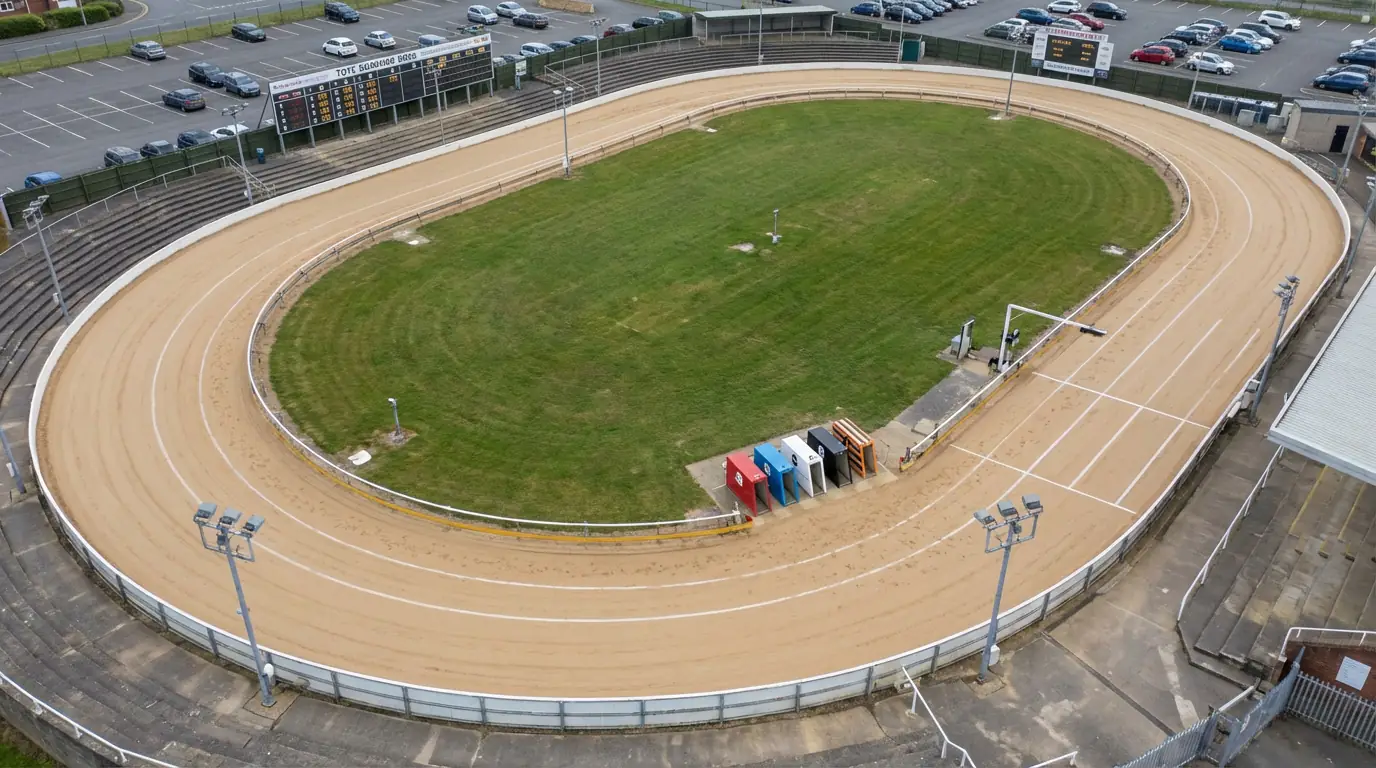
Every greyhound track has a personality written into its geometry, and Crayford's personality was aggression. At 334 metres in circumference, it was one of the smaller GBGB-licensed circuits, and that compactness defined everything from trap bias to race pace. The all-sand surface remained consistent year-round compared to grass tracks, which meant that going adjustments at Crayford were typically minor — but never irrelevant, as even small variations in sand moisture could shift calculated times by several spots.
The track ran right-handed with an outside Swaffham hare, a combination that naturally favoured dogs drawn on the inside traps who could hold the rail into the first bend. The run from the traps to the first bend measured approximately 77 metres — short enough to make trapping speed decisive, long enough to allow one positional change before the field compressed into the turn. That 77-metre corridor was, in effect, where most Crayford races were won or lost.
Race Distances: From 238m Sprints to 946m Marathons
Crayford offered a range of distances that tested very different attributes. The standard programme covered 380 metres (the bread-and-butter distance for graded racing), 540 metres (middle-distance, two full circuits), 714 metres (a stayers' test used for the Golden Jacket), and 874 metres (marathon territory). Sprint races over 238 metres appeared in special events, while the longest distance on the card, 946 metres, was reserved for marathon opens and occasional feature races.
The 380-metre trip involved one full circuit plus a run-in, which meant two bends and a finishing straight. At this distance, early pace was paramount: a dog that led through the first bend rarely got caught unless it faded badly on the run to the line. The 540-metre distance introduced a second circuit and four bends, placing more emphasis on stamina and racing luck — crowding at the third and fourth bends was a frequent factor in 540-metre results. The 714-metre and longer trips turned the race into a genuine endurance test, where the data on a dog's late-race sectional times became the most telling element in any form analysis.
How the Short Run to the First Bend Changed the Odds
The 77-metre run to the first bend is the single most important physical characteristic in Crayford's results archive. Compare it with Romford, where the run-up is roughly 115 metres, or Hove at around 150 metres, and you begin to see why dogs that excelled at Crayford sometimes struggled elsewhere — and vice versa. A longer run-up allows a wider-running dog time to find a position before the field hits the bend. At Crayford, that time simply did not exist.
The practical consequence was a measurable trap bias, which we will examine in detail shortly, and a premium on what racecards label "EP" — early pace. Dogs described as slow away (SAw) in their form figures faced a structural disadvantage at Crayford that would be less severe at a track with a more generous run-up. If you are analysing archived Crayford results and see a dog with consistently strong finishing positions despite a SAw remark, you are looking at an animal with enough raw ability to overcome a layout that was working against it. That kind of dog often represented value when it moved to a bigger track.
This geometry also explains why certain trainers with access to trial facilities that mimicked Crayford's tight bends and short run-up tended to dominate the graded cards. The track rewarded specific preparation, and the results archive reflects that clustering.
Decoding Crayford Greyhound Results: A Practical Breakdown
A finishing time without context is just a number. A Crayford result line that reads "1st, T4, 23.44, -10, 23.54 calc" is a compressed analytical statement, and every element in that line does a different job. The finishing position tells you the outcome. The trap number tells you where the dog started. The raw time tells you how fast the race was run. The going adjustment tells you what the track surface was doing. And the calculated time — the number that matters most — tells you how fast the dog would have run on a perfectly standard surface. Learning to read these layers is the difference between punting on results and analysing them.
Sectional Times, Splits and What Early Pace Reveals
Sectional times, usually called splits, record how long a dog takes to reach a specific checkpoint during the race — typically the first bend or a designated timing point. At Crayford, the split time for a 380-metre race captured the first section from trap to roughly the first-bend exit. This is the number that separates dogs with genuine early pace from those that finish fast but rely on others fading.
Consider two dogs that both finish a 380-metre race in 23.50 seconds. Dog A posts a split of 3.78 seconds and leads from trap to line. Dog B splits 3.95 and finishes strongly from fourth at the second bend. The raw time is identical, but the profiles are completely different. Dog A is a front-runner whose entire race plan depends on a clean break. Dog B is a closer who needs racing room and a moderate pace to run into. At Crayford, where the first bend came quickly and the field compressed early, Dog A's profile was structurally favoured — but Dog B's profile often carried more transferable value at a bigger track.
The best use of sectional data from Crayford's archive is comparative: rank the split times across a dog's last six runs and look for consistency. A dog that splits between 3.80 and 3.85 every time is predictable, which is useful for forecast and tricast construction. A dog whose splits swing between 3.75 and 4.00 is volatile, which is useful for identifying overlays when the market prices it on its best run rather than its average.
Calculated Time vs Winning Time: The Going Factor
The going at a greyhound track is the equivalent of ground conditions in horse racing. It measures how fast or slow the surface is running relative to a standard benchmark. At Crayford, the going was expressed as a number: negative values meant the track was running fast (the dog's time benefited from the surface), positive values meant the track was running slow.
Winning time is what the clock showed. Calculated time is what the clock would have shown on a neutral surface. The formula is straightforward: calculated time equals winning time minus the going adjustment. So a dog that runs 23.44 on a track running -10 (fast) has a calculated time of 23.54. That calculated figure is the one you compare across meetings, across weeks, and across months — because the raw time is contaminated by the day's surface condition.
Trap 4 — Worked Example
Raw winning time: 23.44s
Going: -10 (fast track)
Calculated time: 23.44 - (-0.10) = 23.54s
A punter comparing this dog's 23.44 to another's 23.60 from a different meeting might assume a large ability gap. But if the second dog ran on a +10 going (slow track), its calculated time is 23.50 — actually faster. The going correction removes the surface noise and reveals the real signal.
This distinction mattered enormously at Crayford because its sand surface, while relatively stable, could shift by 10 to 20 spots between a dry Tuesday evening and a damp Friday morning. Punters who ignored calculated time and priced dogs on their raw finishing times were systematically mispricing the form, which created opportunities for those who bothered with the adjustment.
Bend Positions and the Running Line Story
A standard Crayford result recorded the dog's position at each bend plus the finishing position. For a 380-metre race, that meant positions at bend one, bend two, and the line. For a 540-metre race, you got four bend readings plus the finish. This sequence is a compressed race narrative that tells you more about a dog's racing character than the finishing position alone.
A dog that reads 1-1-1 led throughout — comfortable, but the result does not tell you whether it would hold that lead against faster opposition. A dog that reads 5-4-2 improved from mid-division, suggesting finishing pace but a lack of early position. A dog that reads 1-1-3 led and faded, which could signal declining stamina, lack of fitness, or interference that the bend positions alone do not reveal — that is where the race remarks become essential.
The pattern you want in archived form is consistency of position improvement. A dog that routinely gains two or more positions between the last bend and the line is a strong closer. At Crayford, closers needed more ability than front-runners to post the same finishing position, because the tight track gave leaders a geometric advantage through the bends. If you find a consistent closer in the archive, you may be looking at a dog whose raw ability was suppressed by the layout — a useful insight when assessing its chances at a more galloping circuit.
Remarks such as "Crd" (crowded), "Bmp" (bumped), "RnUp" (ran up, meaning it hit the hare rail), and "SAw" (slow away) add the detail that bend positions cannot capture. A dog marked Crd at bend two that dropped from second to fifth was not beaten on ability — it was beaten on luck. A dog marked SAw that recovered from sixth to second has shown more ability than the winner. Reading these remarks alongside the positional data is what transforms a results page from a list of numbers into an analytical tool.
Crayford Trap Draw: The Numbers Behind the Bias
Trap 4 won 19% of all races in 2019 — and most punters never noticed. In a perfectly fair six-trap race, each box should win roughly 16.7% of the time. When one trap consistently exceeds that figure by two or three percentage points across hundreds of races, you are looking at a structural bias, not a statistical blip. Crayford's right-handed layout, short run-up, and outside hare system created measurable and persistent trap advantages that any serious form student needed to account for.
Win Percentages by Trap Number
Across the final years of Crayford's operation, trap statistics from the standard 380-metre distance showed a pattern that was consistent enough to inform betting strategy. Traps 3 and 4 — the middle-inside boxes — tended to post the highest win rates, frequently sitting in the 18-19% range. Trap 1, despite its rail position, was slightly suppressed because dogs drawn there could get squeezed against the rail by outward-drifting runners from traps 2 and 3 on the short run to the first bend. Traps 5 and 6, on the outside, had the lowest win rates at the sprint distance, typically 13-15%, because the wide draw meant covering extra ground through the first two bends — distance that translated directly into lost lengths.
These figures were not secrets. SIS published trap statistics weekly, and several data services compiled running tallies. The edge came not from knowing the bias existed, but from understanding when the market had already priced it in and when it had not. A Trap 4 dog at 3/1 in a 380-metre A4 graded race was not automatically a value bet just because of the trap draw. But a Trap 4 dog at 5/1 with strong sectional times and a rail-running style — that was a dog whose price did not fully reflect the structural advantage it held.
How Distance Changed the Trap Advantage
The trap bias that favoured inside draws at 380 metres weakened considerably over longer distances. At 540 metres, which involved two full circuits, the field had time to sort itself out after the initial scramble for the first bend. By the third bend, a dog's running style and stamina mattered more than its starting box. The data showed trap win rates converging toward the expected 16.7% at 540 metres and beyond, with the outside traps recovering most of their disadvantage.
At the longest distances — 714 and 874 metres — the trap draw became almost irrelevant in statistical terms, though it still influenced the first-bend positioning that could set up a dog's race. A trap 6 dog in a 714-metre Golden Jacket heat had a harder first bend than a trap 2 dog, but six bends later, the form and fitness of the animal dominated the outcome.
From Trap Stats to Betting Edge: A Step-by-Step Calculation
Step 1 — Trap win rate: Trap 4 at 380m wins 19% of the time historically.
Step 2 — Implied probability from bookmaker odds: The dog is priced at 5/1, which implies a 16.7% chance (1 / 6.0).
Step 3 — Compare: The trap-adjusted probability (19%) exceeds the market-implied probability (16.7%).
Step 4 — Overlay assessment: Before backing, cross-reference with form factors — calculated times, grade, running style. If the dog's form supports a 19-20% win probability, the 5/1 price represents a positive expected-value position. If the form suggests the dog is outclassed regardless of the trap draw, the structural advantage is not enough to compensate.
Key principle: Trap statistics provide a baseline adjustment. They do not replace form analysis — they refine it.
The practical takeaway from Crayford's trap data is transferable to any track. Every circuit has a trap bias shaped by its geometry, run-up distance, and hare system. The specifics change — at a left-handed track, the high traps benefit instead — but the analytical method is identical: measure the bias, compare it to the market price, and overlay it onto the form picture. Crayford just happened to produce one of the clearest examples in UK greyhound racing.
From static data to live decisions — here is how Crayford punters turned numbers into bets.
Betting on Crayford Greyhounds: Markets, Odds and Edge
If you don't know what a reverse forecast costs you in margin, the bookmaker does. Crayford's betting markets ranged from the simplest win bet to multi-leg combination wagers that required predicting the exact finishing order of three dogs. Understanding what each market offered — and what it cost in terms of hidden margin — was the difference between entertainment and informed wagering. The principles outlined here remain directly applicable to every GBGB-licensed track still racing.
All betting involves risk. Only bet with money you can afford to lose. If gambling stops being enjoyable, visit BeGambleAware.org for support and advice. You must be 18 or over to place a bet in the United Kingdom.
Win, Place, Each-Way: When Simple Bets Were Enough
A win bet on a greyhound is exactly what it sounds like: your dog finishes first, or you lose your stake. A place bet pays out if the dog finishes in the first two (in a six-runner race, the standard field size for greyhound racing). An each-way bet combines both — half your stake on the win, half on the place — and the place portion typically pays at a quarter or a fifth of the win odds, depending on the bookmaker.
At Crayford, where six-runner fields were the norm in graded racing, each-way terms were usually 1/4 odds for places one and two. That payout structure made each-way betting an interesting proposition on dogs priced at 5/1 or above, because the place portion returned enough to cover the losing win stake with profit. On shorter-priced dogs, each-way betting was mathematically inefficient — you were tying up capital on a place return that barely exceeded your total stake. Experienced Crayford punters used win-only bets on dogs they considered strong favourites, and reserved each-way for those mid-range selections where the safety net carried genuine value.
Forecasts, Tricasts and Combination Bets at Crayford
A forecast bet requires you to predict the first and second dogs in the correct order. A tricast extends that to first, second, and third. At Crayford, where field sizes were consistently six runners and the tight track produced fewer surprise results than bigger circuits, forecast and tricast betting attracted a dedicated following among regular punters who knew the form book.
The straight forecast paid dividends from a pool, with returns varying based on wagering volume on that specific combination. A reverse forecast covered both permutations and cost double the unit stake. Combination forecasts and tricasts expanded further: a combination tricast on three dogs cost six units (3 x 2 x 1 permutations), while four dogs cost twenty-four units. The margin embedded in pool-based forecast and tricast bets typically ran between 20% and 30% of the total pool. Punters who used these markets successfully at Crayford tended to focus on one strong anchor — a dog they were confident would finish in the first two — and then spread the other leg across two or three contenders.
Reading the Market: SP, Early Prices and BOG
Starting Price (SP) in greyhound racing is determined by on-course bookmakers and represents the final available odds when the hare starts running. Early prices are the odds offered by online bookmakers in the hours or minutes before a race. Best Odds Guaranteed (BOG) is a promotion where the bookmaker pays out at whichever is higher — the price you took when you placed the bet, or the SP. At Crayford, BOG was available through several major operators on SIS-broadcast races, and it effectively gave punters a free option on SP drift.
The tactical play was straightforward: if you had a strong opinion on a dog whose early price was likely to shorten as money came in, backing at the early price with a BOG bookmaker locked in your advantage. If the dog drifted instead — meaning its odds lengthened because the market did not share your assessment — BOG ensured you received the higher SP. The downside was that BOG-eligible races were limited to specific broadcasts, and not all bookmakers extended the offer to every Crayford meeting.
Market movements at Crayford were particularly informative because the regular punter base was small and knowledgeable. A significant price contraction — say, from 4/1 to 5/2 in the final ten minutes — often reflected money from connections or informed local bettors rather than casual recreational interest. Tracking these moves across a series of meetings revealed patterns: certain trainers' dogs shortened consistently when they were expected to perform, while others were routinely friendless in the market regardless of their form figures. That market intelligence layer sits on top of the statistical analysis, and it was one of the edges that Crayford's regular betting community exploited effectively.
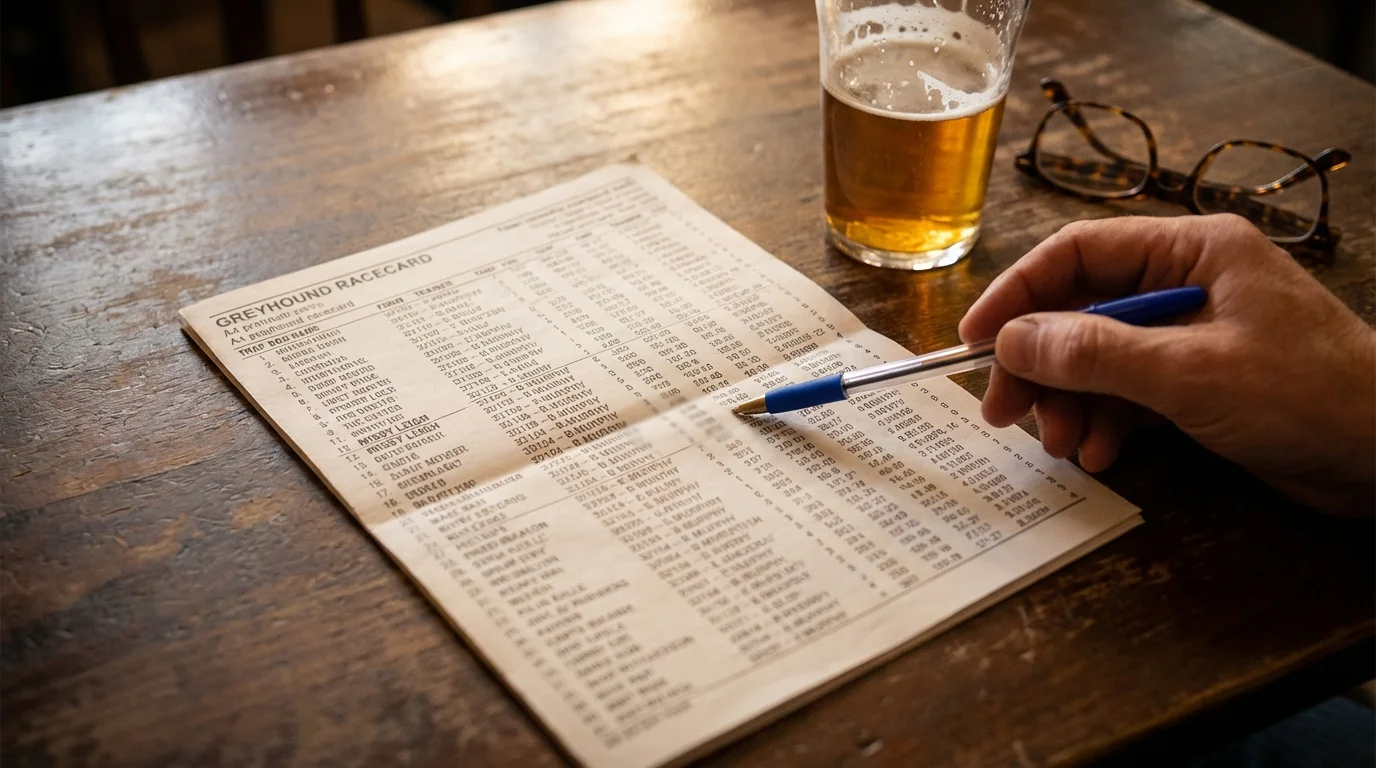
Form Analysis for Crayford: What the Racecard Told You
Six lines of form per dog. Twelve races on a card. Seventy-two stories compressed into abbreviations. A Crayford racecard was a dense document, and the punters who extracted the most from it knew which details to prioritise. At Crayford, six factors consistently separated informed analysis from guesswork — and they apply, with track-specific adjustments, to every circuit in the country.

Recent Form
The last three runs carry more weight than the last six. A dog improving through its recent sequence — say, from fourth to third to second — is trending in the right direction. A dog whose last three runs show declining finishing positions may be tailing off in fitness or confidence.
Trap History
Some dogs consistently perform better from specific traps. Check their record from the allocated draw: a dog with three wins from trap 2 but no wins from trap 6 is not the same proposition depending on tonight's draw.
Grade Movement
Has the dog been raised or dropped in grade since its last run? A dog dropping from A3 to A4 is meeting weaker opposition — but it may have been dropped because it lacked pace, not because the trainer chose to.
Trainer
At Crayford, a handful of trainers dominated the results. Knowing which trainers had high strike rates at which grades, and which tended to have their dogs fit first time after a break, added a meaningful layer to form analysis.
Weight
Weight changes between runs can indicate fitness shifts. A dog that gains a kilogram between races may be carrying extra condition. A significant weight drop might suggest the trainer has sharpened the dog up — or it might signal a health concern. Context matters more than the number alone.
Sectional Speed
As discussed in the decoding section, split times reveal the pace profile. A dog with the fastest average split in the race is the most likely leader. A dog with the slowest split but the fastest late sectional is the strongest closer. Match the pace profile to the trap draw and the likely dynamics of the race.
Grade Movements and Class Signals
Greyhound racing in the UK uses a grading system that runs from A1 (highest graded class) through to A11 or A12 (lowest) at tracks with enough depth of runners. Crayford graded its races from A1 down to A10, with open races sitting above the graded structure entirely. A dog's grade tells you what level of competition it has been assessed against by the racing manager, based on recent performance.
The most useful grade signal for betting purposes was a dog dropping in class after a series of competitive runs at a higher grade. If a dog finished third, third, and fourth in A3 company, and was now reappearing in an A4 race, the form figures looked mediocre but the class signal was positive: it had been competitive against better opposition and was now meeting weaker runners. Conversely, a dog rising in grade after a couple of wins at a lower level might struggle against faster dogs, even though its recent form looked attractive on paper.
Open races, which sat outside the grading system and were open to dogs of any grade, required a different analytical lens. Here, the calculated times from recent runs became more important than the grade designation, because you were comparing dogs from different grading pathways that may not have intersected before. Crayford's archive of open-race results is particularly valuable for form students because it provides direct time comparisons between dogs whose graded form alone would be difficult to cross-reference.
Trainer Patterns at Crayford
Crayford was a track where trainer influence was amplified by the small, regular pool of competitors. A handful of kennels based in Kent and south-east London provided the majority of runners, and their patterns became readable over time. Certain trainers consistently presented their dogs at peak fitness for specific competitions, while others used early-season graded races as preparation for bigger targets later in the calendar.
Tracking trainer strike rates by grade, distance, and time of day revealed subtle but actionable patterns. A trainer with a 22% strike rate in evening A3 races over 380 metres, against a track average of 17%, is providing a consistent edge across the portfolio. The disappearance of Crayford means those patterns are frozen in the archive, but many Crayford trainers relocated to Romford, Hove, or other circuits after the closure, and the habit of tracking trainer performance carries over to any track.
Crayford's Major Competitions: Golden Jacket, Gold Collar and Beyond
The Golden Jacket moved to Crayford in 1987 and never left — until there was nowhere left to stay. That competition, run over 714 metres, became the stadium's flagship event and one of the most prestigious stayers' races in British greyhound racing. Its journey mirrored the sport's broader trajectory: conceived at Harringay in 1975, it migrated to Hall Green and Monmore before settling at Crayford when the south-east London track was rebuilt. For nearly four decades, the Golden Jacket final was the night that drew the biggest crowd, the deepest betting market, and the strongest fields that Crayford could assemble.
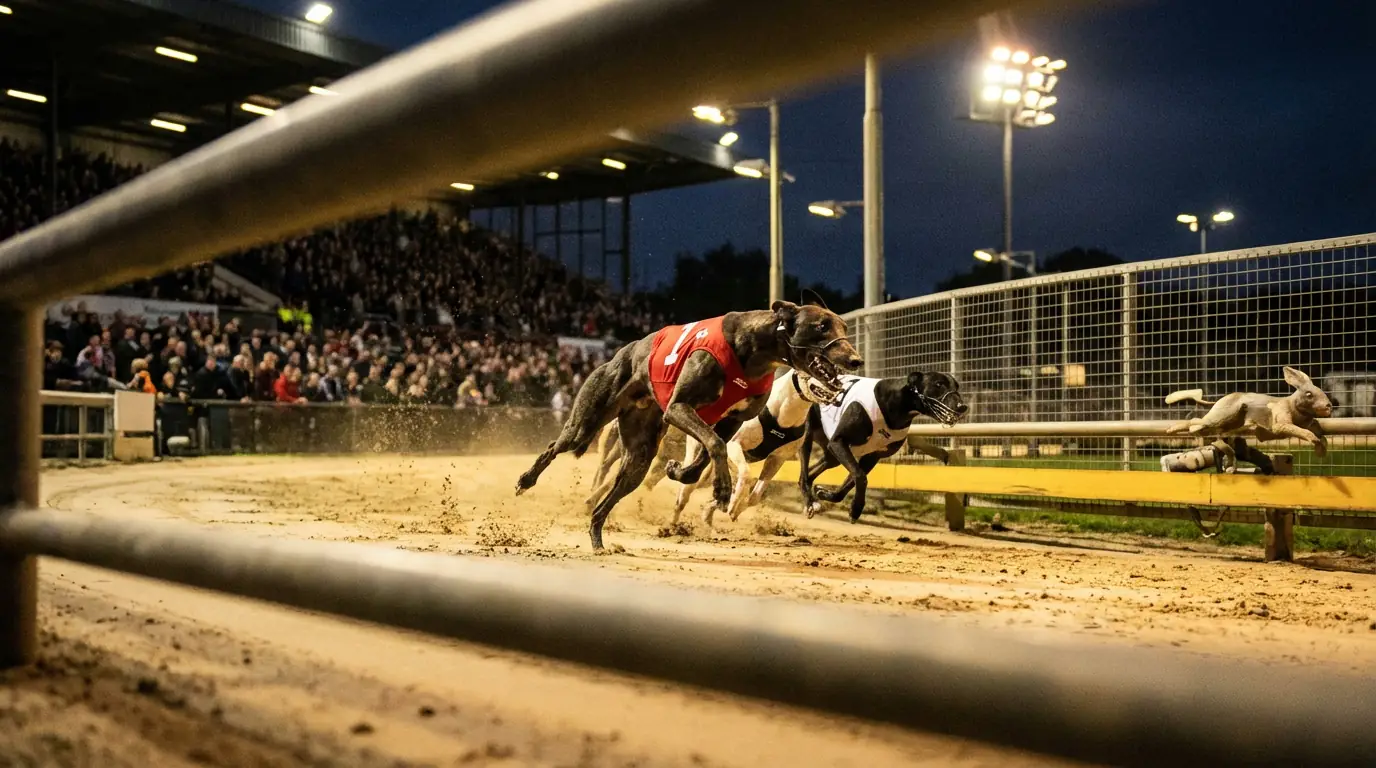
The final Golden Jacket at Crayford was won by Dazl Rolex in 2024, trained by Ricky Holloway — a local handler whose victory was the first home-trained winner since 2007. It was a fitting farewell, though nobody in the crowd that night knew the farewell was coming. The competition has since relocated to Monmore Green, where the Ladbrokes Golden Jacket continues as a Category One event. The 2026 edition, running this February at the Wolverhampton circuit, features defending champion Mongys Wild — a dog whose back-to-back bid has been one of the storylines of the winter greyhound season.
The Gold Collar was Crayford's other Category One event, run over 540 metres. Originally an historic race from Catford, it was revived at Crayford in 2015 after years in abeyance, and quickly re-established itself as a high-quality middle-distance competition. The Kent St Leger, run over the same 714-metre trip as the Golden Jacket, completed the triumvirate of major races that gave Crayford's calendar a weight that few tracks outside Towcester and Nottingham could match.
Beyond the headline competitions, Crayford hosted the Guys and Dolls (a mixed-sex open), the Crayford Rosebowl (inaugurated with the new stadium), and the Kent Vase. It was also the final home of competitive hurdle racing in UK greyhound racing — the Champion Hurdle was staged at Crayford in 2023 for the first time, and the closure of the stadium effectively ended licensed hurdle racing in the country, since no other active GBGB track maintained hurdles on its circuit.
Crayford hosted three Category One events: the Golden Jacket (714m), Gold Collar (540m), and the Kent St Leger (714m). The Golden Jacket has moved to Monmore Green, where the 2026 final takes place this February. The futures of the Gold Collar and Kent St Leger remain unconfirmed.
The results from these competitions are among the most analytically rich in Crayford's archive. Open-race fields attracted dogs from across the country, producing direct time comparisons between animals that would never meet in graded company. For form students working through the historical data, Golden Jacket and Gold Collar results offer a cross-track benchmark that standard graded results cannot provide.
After January 2025: Crayford's Closure and What Comes Next
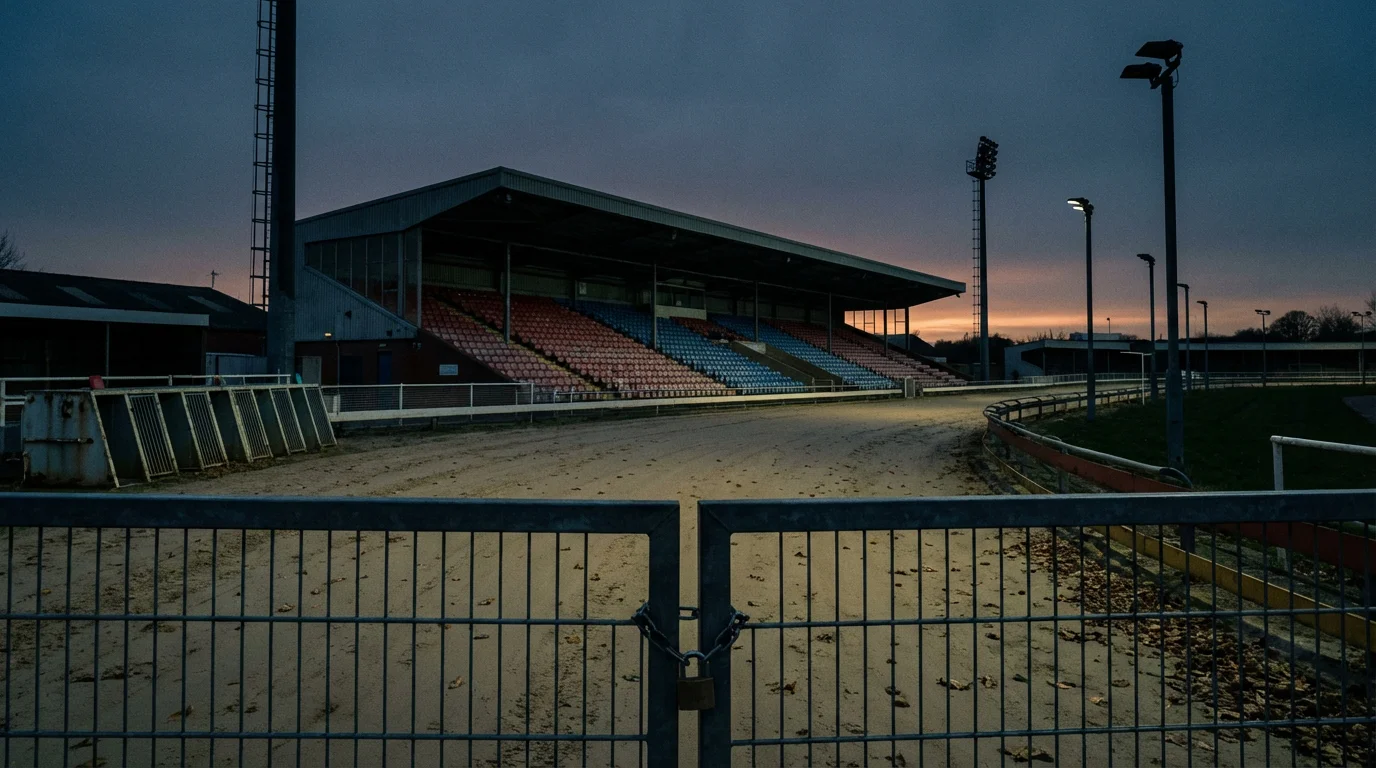
On Sunday 19 January 2025, the last race was called at Crayford Stadium. The track formally ceased operations two days later, ending 38 years of racing at the rebuilt venue and nearly nine decades of greyhound sport on the broader site. Crayford was not the only track to close in 2025 — Perry Barr shut its doors in August, and Swindon followed in December — but its loss hit the south-east London greyhound community hardest because it had been the region's most accessible track for both punters and trainers.
Why Entain Closed the Stadium
Entain, the parent company of Ladbrokes and owner of Crayford since the Ladbrokes-Coral merger in 2017, cited viability. The numbers supported the claim. Only 18% of races at Crayford in its final season featured full six-dog fields, well below the 90% target that makes a race meeting commercially functional. Trainer participation had dwindled to the point where meetings were regularly short of runners, and attendance figures had been declining for years. The shift from on-course betting to online wagering eroded the stadium's primary revenue stream, and a 2022 media rights deal that moved Crayford from the Greyhound TV channel to the Arena Racing Company broadcast reduced the track's visibility on some betting platforms.
The announcement came in November 2024 and was met with immediate efforts from third parties to find an alternative operator or rescue plan. Entain held discussions with interested parties but concluded that no viable proposal had been presented. The closure was confirmed on 15 January 2025, four days before the final meeting. Entain committed to supporting affected staff, providing rehoming for displaced greyhounds through partnerships in the UK, US, and Canada, and pledged that its remaining tracks — Romford, Hove, and Monmore — would not be affected.
Interactive Tool
Full-Field Deficit Calculator, and Run-Up Distance Compare
Work out exactly how far short of viable Crayford fell, and how much longer rival tracks give dogs before the first bend.
Shortfall vs Target
-
-
Actual Rate
-
Viability Target
-
Target Multiple
-
What this guide never subtracts: "Only 18% of races at Crayford in its final season featured full six-dog fields, well below the 90% target that makes a race meeting commercially functional." The gap is never stated — it works out to 72 percentage points, meaning the target was 5.00x the actual rate.
Extra Run-Up Distance
-
-
Crayford
-
Comparison Track
-
Percentage Longer
-
What this guide leaves as three raw numbers: "The run from the traps to the first bend measured approximately 77 metres. Compare it with Romford, where the run-up is roughly 115 metres, or Hove at around 150 metres." The differences are never calculated — Romford gives dogs 38m more (+49.4%), and Hove gives 73m more (+94.8%) — nearly double.
Best Alternative Tracks for Crayford Punters
If you built your greyhound betting around Crayford's specific characteristics — tight track, short run-up, sand surface, predictable trap bias — the transition to another track requires recalibration, not reinvention. The form-reading principles transfer. The trap statistics do not.
Romford is the nearest alternative for London-based punters. It runs on a 350-metre circumference (slightly larger than Crayford), is left-handed, and uses a Swaffham hare. Its longer run to the first bend changes the trap dynamics significantly: outside draws carry less of a penalty, and wide-running dogs are more competitive. Romford races on a busy weekly schedule through Entain's media deal, with SIS broadcast coverage ensuring good bookmaker market depth. Several former Crayford trainers have already relocated their operations there.
Hove, on the south coast, offers a 404-metre circuit that produces more open racing than Crayford's tight layout allowed. Its evening meetings feature strong open-race cards, and Hove's consistent fixture list makes it a reliable option for punters who like to build form databases around a single track. The surface is sand, and the track is right-handed, which gives it the closest directional parallel to Crayford of any remaining Entain venue.
Monmore Green in Wolverhampton, the third Entain track, has taken on several of Crayford's prestige events — including the Golden Jacket and Winter Derby — and races over a 415-metre circuit. It is a bigger, more galloping track than Crayford was, and the trap bias patterns are markedly different. Towcester, operated by the Arena Racing Company, reopened in 2020 with modern facilities and has established itself as one of the stronger venues on the UK calendar. Its 420-metre circuit is the largest in the country, producing races where stamina and running style matter more than trapping speed.
Transition Checklist for Former Crayford Bettors
- Check the alternative track's fixture schedule and confirm bookmaker coverage before committing to a new track.
- Compare trap statistics at the new venue — do not assume Crayford's inside-trap bias applies elsewhere.
- Adjust your form readings for different surface conditions, circuit sizes, and run-up distances.
- Review which bookmakers offer Best Odds Guaranteed on races at your chosen track.
- Update your streaming access — Romford and Monmore are on the Entain/SIS broadcast, while other tracks may require ARC or separate providers.
The GBGB's 2026 open-race calendar — published in December 2025 and celebrating 100 years of licensed greyhound racing in the UK — lists 50 Category One competitions spread across the remaining tracks. The sport is smaller than it was, but the competitive programme remains substantial, and the redistribution of Crayford's major events to other venues has strengthened their calendars rather than leaving a void.
Where to Find Crayford Greyhound Results Now
The stadium is gone, but the data isn't. Crayford's results archive stretches back decades, and multiple platforms continue to host, index, and serve that data to punters and researchers. The challenge is knowing which source gives you what level of detail, and which to trust when figures conflict.
The Greyhound Board of Great Britain (GBGB) maintains the official record of all licensed UK greyhound race results, including every meeting held at Crayford under its jurisdiction. The GBGB results database is the authoritative source for finishing positions, times, going, and grades. Access is available through the GBGB website, though the depth of historical data varies depending on the period. For recent seasons — the last five to ten years of Crayford's operation — the records are comprehensive and well-structured.
At The Races provides a greyhound section that includes Crayford's historical racecards and results. The interface allows you to navigate by date, track, and race, making it a practical tool for form analysis. Timeform, which expanded into greyhound racing data, offers rated results and speed figures that go beyond the raw numbers — their calculated-time adjustments and form ratings add an analytical layer that the basic results pages do not provide.
For quick lookups, the Racing Post greyhound section carries results and racecards, while third-party data aggregators such as BetsAPI and The Greyhound Recorder maintain searchable archives. The depth and accuracy of third-party sources can vary, so cross-referencing important figures — particularly calculated times and going adjustments — against the GBGB record is good practice when the data matters for a betting decision or a form study.
SIS Racing, the broadcast and data partner for multiple UK tracks, also archives results from Crayford meetings broadcast on its service. The SIS data feed includes trap-by-trap statistics and meeting summaries useful for macro-level analysis — trend tracking across a season, or isolating performance patterns by time of day.
If you are building a personal database from Crayford's archive, the most efficient approach is to use the GBGB data as the backbone for accuracy, supplement it with Timeform ratings for analytical depth, and overlay it with SIS trap statistics for structural context. That combination gives you the full picture: what happened, how fast it happened relative to conditions, and what the track's characteristics contributed to the outcome.
FAQ
Why did Crayford greyhound stadium close, and can I still access historical results?
Entain, the parent company of Ladbrokes that operated Crayford Stadium, announced the closure in November 2024 and confirmed it in January 2025. The stadium held its final meeting on 19 January 2025. The primary reasons were economic: only 18% of races in the final season achieved full six-dog fields, trainer participation had fallen sharply, and attendance was declining. The shift from on-course to online betting had reduced the stadium's core revenue, and Entain concluded that continuing operations was no longer commercially viable. Historical Crayford results remain fully accessible through the GBGB official results database, At The Races, Timeform, and several third-party data services. The race archive covers decades of meetings and includes finishing positions, winning times, calculated times, going adjustments, bend positions, and race remarks. The data has not been removed or restricted following the closure.
How do I read and interpret greyhound race results effectively?
A greyhound race result contains several layers of information beyond the finishing order. The key elements are: trap number (the starting box), split time (how quickly the dog reached the first timing point, indicating early pace), bend positions (the dog's position at each turn, which maps its race progression), finishing time (the raw clock), going adjustment (how the track surface was running relative to standard), calculated time (the finishing time corrected for going — this is the figure you should compare across meetings), and remarks (abbreviated notes on race incidents such as bumping, crowding, or a slow start). To interpret results effectively, focus on calculated time rather than raw time, track consistency in split times across a dog's last six runs, and read the bend-position sequence as a narrative — a dog improving through the race tells a different story from one that leads early and fades. Cross-reference remarks with positional data to identify dogs beaten by bad luck rather than lack of ability.
Which UK greyhound tracks are the best alternatives to Crayford for racing and betting?
For London-based punters, Romford is the nearest alternative — it is an Entain-operated track with a busy fixture list, SIS broadcast coverage, and a 350-metre left-handed circuit. Several former Crayford trainers have relocated there. Hove, on the south coast, offers a 404-metre right-handed sand circuit with strong open-race cards and consistent evening meetings — its directional layout is the closest to Crayford among remaining tracks. Monmore Green in Wolverhampton has absorbed several of Crayford's prestige events, including the Golden Jacket and Winter Derby, and runs a 415-metre circuit suited to more galloping types. Towcester, operated by the Arena Racing Company, has established itself as one of the UK's premier venues since its 2020 reopening, with the largest circuit in the country at 420 metres. All four tracks are served by major bookmakers with live streaming, and Best Odds Guaranteed is available on most televised meetings. The GBGB's 2026 calendar lists 50 Category One events spread across these and other licensed venues.
The Last Bend: Crayford's Data Outlives Its Floodlights
Results pages don't care whether the stadium is still standing. Crayford's 334-metre circuit no longer hosts racing, but the dataset it produced over nearly four decades remains one of the most instructive in British greyhound sport. Every principle discussed in this guide — reading calculated times, interpreting trap bias, decoding bend positions, assessing grade movements, and constructing bets from form rather than instinct — was refined at Crayford and applies without modification to every active track in the country.
The greyhound racing landscape in 2026 is smaller than it was a decade ago. Three tracks closed in 2025 alone, and the Welsh Government's Prohibition of Greyhound Racing Bill introduced to the Senedd in September 2025 signals that the political pressures on the sport are not easing. But the GBGB's centenary-year calendar still carries 50 Category One events, Romford races five times a week, and Monmore's Golden Jacket final draws a competitive field of the best stayers in training. The sport contracts, but it has not vanished — and for punters who built their analytical frameworks on Crayford's data, the framework travels.
If Crayford taught its regulars one thing, it was that a small, tight track with predictable biases rewarded preparation over luck. The floodlights have gone dark, but the data still has something to say. The next bet is at a different venue. The method is the same.
