SIS and Sky Sports Greyhound Racing Coverage
 Available in US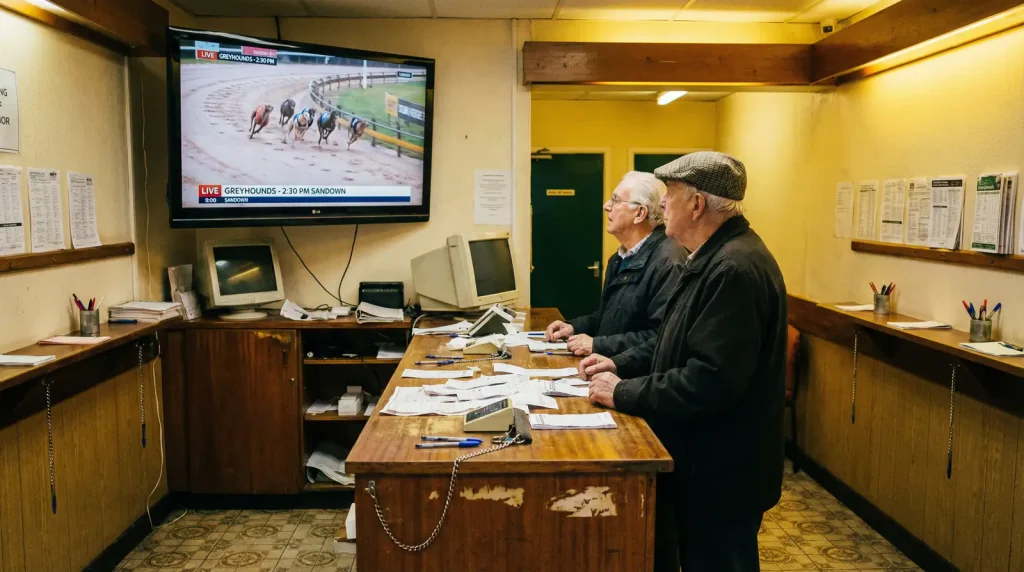
Almost every greyhound race you watch in the UK reaches your screen through one of two providers: SIS or Sky Sports Racing. Between them, they cover the vast majority of licensed meetings, from the pre-dawn BAGS cards through to the final evening race under floodlights. The infrastructure behind this coverage is invisible to most punters — you open your bookmaker app, tap the live stream icon, and the race appears — but understanding who is broadcasting what, and how the coverage is structured, helps explain why certain meetings are easier to watch than others and why the quality of the experience varies between sessions. Stay updated at crayfordgreyhound.
The two providers serve different roles in the ecosystem. SIS supplies the backbone — the volume coverage that keeps betting shops and online platforms stocked with continuous racing content. Sky Sports Racing provides the editorial layer — studio presentation, expert analysis, and premium coverage of higher-profile meetings. Together, they deliver a broadcast product that makes UK greyhound racing one of the most accessible betting sports in the country, even as the number of stadiums continues to contract.
SIS: The Backbone of UK Dog Racing Broadcasting
Sports Information Services has been the dominant distributor of greyhound racing content in the UK for decades. The company holds broadcasting rights for the BAGS meetings — the Bookmakers Afternoon Greyhound Service schedule that runs through mornings, afternoons, and early evenings — and supplies live video and data feeds to virtually every licensed bookmaker operating in the UK.
The SIS operation is built for volume and reliability. On a typical weekday, SIS covers meetings at three to five greyhound tracks simultaneously, each running races every twelve to fifteen minutes. The feeds are captured by fixed cameras at each venue — typically covering the start, the bends, and the finish — and transmitted to bookmaker platforms and shop screens with minimal delay. The production is functional rather than cinematic: no studio analysis, no pre-race punditry, and limited or no commentary on many feeds. The purpose is to provide the information that a bettor needs to follow their selections, not to produce a television programme.
For punters, SIS coverage is accessed through the bookmaker’s interface rather than through SIS directly. When you stream a morning or afternoon greyhound race on your bookmaker’s app or website, the video is almost certainly coming from SIS. The quality is adequate for following the action — you can identify the dogs by trap colour, track the field through the bends, and see the finishing order — but it is not high-definition broadcasting. The cameras are fixed, the angles are limited, and the overall presentation has not changed dramatically in years.
The strength of SIS is coverage breadth. Every BAGS meeting at every participating track is captured and distributed. There are no gaps in the schedule, no meetings that go uncovered, and no races that are available for betting but not for viewing. This comprehensive coverage is the foundation of the UK greyhound betting market. Without it, the bookmaker shop network — which relies on continuous racing content to fill its screens — would not function in its current form.
SIS also provides the data feeds that power the results services, timing displays, and racecard information used by bookmakers and racing platforms. The live stream is the visible product, but the data infrastructure underneath it — finishing times, going corrections, trap draws, running comments — is equally important to the overall ecosystem.
Sky Sports Greyhound: What It Covers
Sky Sports Racing — the dedicated racing channel available to Sky TV subscribers — covers a different segment of the greyhound calendar. Its focus is on evening meetings at higher-profile tracks, major open races, and Category One competitions. Where SIS provides the volume, Sky Sports Racing provides the quality: studio presentation, expert tipsters, pre-race analysis, and post-race interviews with trainers.
The channel broadcasts a mix of horse racing and greyhound racing throughout its schedule, with greyhound coverage typically concentrated in the evening slots. The meetings shown on Sky Sports Racing tend to be the higher-grade cards — better fields, more competitive racing, and more betting interest than the standard BAGS schedule. For punters who want context alongside the action, Sky’s studio team provides the kind of informed discussion that the raw SIS feed does not attempt.
Access to Sky Sports Racing requires either a Sky TV subscription with the appropriate sports package or access through a compatible streaming platform. Some bookmakers include Sky Sports Racing within their streaming offerings, giving account holders access to the channel’s output alongside the standard SIS feeds. The availability varies by operator, so checking what your bookmaker account includes is the practical first step.
Sky Sports Racing’s greyhound coverage has grown in recent years as the channel has sought to differentiate itself within the racing media landscape. The quality of the presentation is measurably higher than the SIS product: better camera work, dedicated commentary, and a production standard that treats greyhound racing as a legitimate sporting event rather than purely a betting vehicle. For viewers who care about the sport as well as the betting, Sky’s coverage is the more engaging product.
BAGS Meetings and Broadcast Schedules
The BAGS schedule is the engine room of UK greyhound broadcasting. These meetings are staged specifically to provide content for the bookmaker market, and their timing is structured around the betting day rather than the sporting calendar. A typical weekday BAGS schedule might include meetings starting at 10:00, 10:30, 11:00, and 11:30 at different tracks, with races staggered so that a new race is available every few minutes throughout the morning and afternoon.
The commercial logic is straightforward: bookmaker shops open in the morning and need something on the screens. Horse racing typically does not start until early afternoon, leaving a gap that greyhound racing fills. BAGS meetings occupy this gap with relentless efficiency, providing a continuous stream of six-dog races that generate betting activity from the moment the shops open until the horse racing card takes over in the afternoon.
Evening meetings at major tracks are broadcast under separate arrangements — some through Sky Sports Racing, some through SIS, some through both depending on the specific deal between the track operator and the broadcasters. The evening schedule is less regimented than BAGS: meetings start at a fixed time (typically 18:30 or 19:00) and run through a card of ten to fourteen races over the course of three to four hours.
The broadcast schedule for any given day is published in advance through bookmaker platforms, the GBGB website, and racing press services. Planning which meetings to follow — and which to bet on — is easier when you know the schedule in advance. Not every meeting will be relevant to every punter. Selecting the meetings where you have the best form knowledge, at tracks you understand, is more productive than spreading your attention across every available race.
Post-Crayford: Adjusted Coverage
Crayford’s closure in January 2025 (Kent Online) removed one of the more frequently broadcast venues from both the SIS and Sky Sports Racing schedules. Crayford hosted regular BAGS meetings and evening cards that were a consistent part of the weekly programming. Its absence left a gap that was filled by redistributing races across the remaining tracks and, in some cases, increasing the frequency of meetings at other venues.
For punters, the practical impact was a shift in the schedule rather than a reduction in total content. The same overall volume of greyhound racing is broadcast, but the mix of tracks has changed. Meetings that might previously have been at Crayford are now distributed among Romford, Sittingbourne, Hove, and other venues. The form data that punters had built up for Crayford became irrelevant overnight, replaced by the need to build comparable knowledge at whatever track absorbed the schedule slot.
The broadcasting infrastructure itself was unaffected. SIS and Sky Sports Racing continue to cover the same total number of meetings; only the venues have shifted. The cameras, data feeds, and streaming arrangements at the remaining tracks were already in place, and no significant technical adjustment was required to accommodate Crayford’s absence from the schedule. Also check our live greyhound racing.
The Race You Can’t See Still Runs
Broadcasting made greyhound racing accessible beyond the stadium terraces, and it is broadcasting that keeps the sport commercially viable in an era of declining live attendance. The dogs race whether anyone is watching in person or not — the audience is on phones, laptops, betting shop screens, and televisions. SIS and Sky Sports Racing are the conduits that connect the track to the punter. Without them, greyhound racing’s betting market collapses. With them, a race at Romford on a Tuesday morning reaches every bookmaker platform in the country within seconds. The stadium may be half-empty. The audience is not.
