Comparing Greyhound and Horse Racing Betting
 Available in US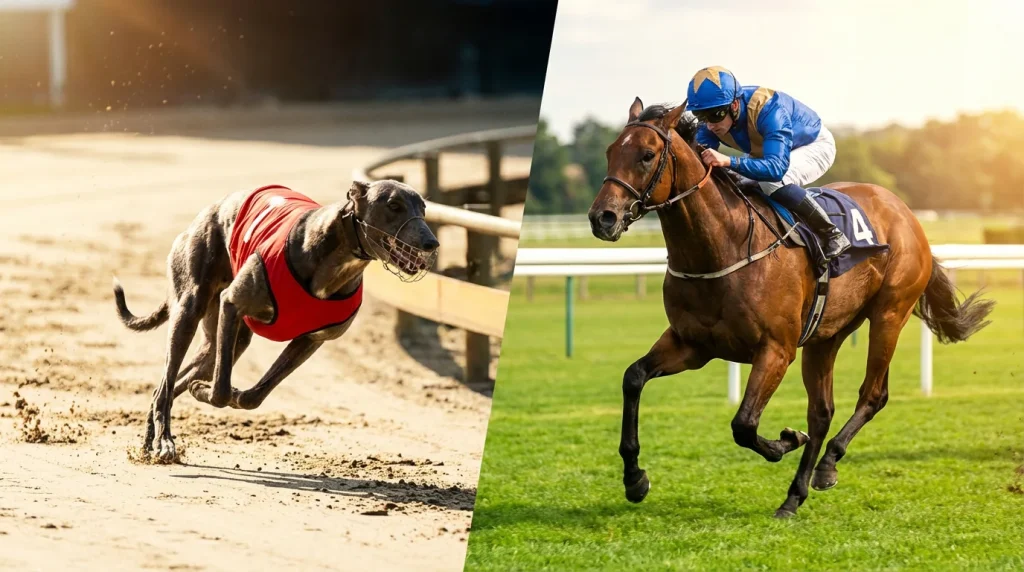
Most punters who bet on greyhounds also bet on horses, and vice versa. The two sports share enough common ground — form analysis, odds markets, multiple bet types, a race-by-race rhythm — that the transition from one to the other feels natural. But the differences between them are substantial enough to trip up anyone who assumes that the same approach works identically for both. Greyhound racing and horse racing produce different data, operate on different timescales, and reward different analytical priorities. Understanding where they converge and where they diverge is the first step to betting on either one effectively. Find more racing guides at crayfordgreyhound.
Field Size and Race Frequency
The most immediate difference is the field. A greyhound race has six runners. A horse race typically has eight to sixteen, sometimes more in handicaps and major festivals. This disparity affects everything downstream: the probability of any individual runner winning, the odds range across the field, the complexity of forecast and place betting, and the degree of randomness in the outcome.
In a six-dog greyhound race, the baseline probability of any runner winning is 16.7%. In a twelve-horse race, it is 8.3%. This means greyhound betting operates in a tighter probability space — favourites win more often (around 33-36% in greyhound racing versus roughly 30-33% in horse racing), and the range of prices across the field is more compressed. A 10/1 outsider in a greyhound race is a genuine longshot; in a twenty-runner horse race, 10/1 is a mid-range price.
Race frequency is the other major structural difference. UK greyhound racing produces dozens of races per day, every day of the week, across multiple tracks running simultaneously. Horse racing’s schedule is more concentrated — typically a few meetings per day with six to eight races each, and blank days during the week when no meetings are staged. The sheer volume of greyhound racing means more betting opportunities but also more temptation. The discipline required to wait for the right bet is tested far more severely in a sport that offers a new race every twelve minutes than in one where the next opportunity might be an hour away.
Smaller fields also mean that individual variables carry more weight. In a six-dog race, the trap draw can account for a significant share of the outcome variance. In a twelve-horse race, the draw matters on some courses but is diluted by the larger number of runners and the presence of a jockey who can make tactical decisions during the race. Greyhound racing has no jockeys — the dogs run on instinct and training — which reduces the tactical dimension but increases the importance of pre-race factors like trap draw, running style and early pace.
Form Analysis: Dogs vs Horses
Form analysis in both sports follows the same broad principle: study past performances to predict future outcomes. The data available for each sport, however, differs in scope and emphasis.
Greyhound form is built around calculated times, split times, bend positions, and racecard abbreviations. The form cycle is fast — dogs race frequently, often weekly, and their form lines update rapidly. A dog’s last six runs might span six weeks, providing a dense, recent data set. The analytical challenge is reading the nuances within a short-cycle form book: was a poor run caused by crowding, a bad draw, or genuine decline? Is a strong run a sign of improvement or a product of weak opposition?
Horse racing form is deeper and more layered. Horses race less frequently — every two to four weeks is typical — and the form book incorporates variables that don’t exist in greyhound racing: going preference on a wider scale (firm to heavy, on turf and all-weather), course-specific characteristics, distance aptitude across a broader range, jockey skill, trainer intent (is the horse being prepared for a bigger race?), and the weight carried in handicaps. The analytical complexity is greater, but so is the time between data points, meaning each individual run carries more weight.
One significant difference is the role of the human element. Horse racing includes jockeys — riders who make real-time decisions during the race about positioning, pace, and timing of a finishing effort. A good jockey on a moderate horse can outperform a poor jockey on a better horse. Greyhound racing has no such variable. The dogs race purely on their own instincts and physical ability, which makes the outcome more mechanistic and, in some respects, more predictable. There is no tactical ride to account for, no jockey booking to interpret, and no riding instructions to speculate about.
Odds Behaviour and Market Liquidity
Odds in both sports are formed through a combination of bookmaker pricing and market activity, but the scale and liquidity differ dramatically. Horse racing markets attract vastly more money than greyhound markets. A major horse race — the Cheltenham Gold Cup, the Grand National — generates betting turnover in the tens of millions. The biggest greyhound race of the year — the English Greyhound Derby final — generates a fraction of that.
This liquidity difference has practical consequences. Horse racing odds are more efficient — they are shaped by a larger pool of informed money, professional bettors, exchange traders, and analytical resources. Finding value in a horse racing market means competing against a deep, sophisticated market. Greyhound odds are less efficient because the markets are thinner, less money flows through them, and fewer professional analysts focus on the sport. This creates more pricing errors, more opportunities for the informed punter, and more volatility in the odds.
Exchange betting underlines the gap. Horse racing exchange markets are liquid enough to support five- and six-figure bets on major races. Greyhound exchange markets are often too thin to absorb a fifty-pound bet without moving the price. For punters who want to use exchanges, horse racing is the more practical option. For punters who are content with bookmaker odds and want to exploit pricing inefficiencies, greyhound racing’s thinner markets can work in their favour.
Betting Types and Returns
The betting menu is largely the same: win, each-way, forecast, tricast, accumulators, and the various combination bets. The key differences are in the terms and the returns.
Each-way terms in greyhound racing typically pay two places at 1/4 odds in a six-dog field. In horse racing, the standard terms are three places at 1/4 or 1/5 odds, with four or more places in larger handicaps and selected races. The additional places in horse racing make each-way a more forgiving bet type. In greyhound racing, missing the first two home means losing both halves of the bet — there is no third-place safety net.
Forecast and tricast bets are more popular in greyhound racing than in horse racing, partly because the smaller field makes predicting the first two or three finishers less daunting. A straight forecast in a six-dog race has 30 possible outcomes; in a twelve-horse race, it has 132. The smaller combinatorial space in greyhound racing makes forecasts more accessible and the dividends, while variable, are often more achievable. Tricast dividends in greyhound racing can be particularly attractive because the six-dog field means only 120 permutations, compared to over 1,300 in a twelve-horse race.
Accumulators — combining multiple selections across different races — are a staple of both sports. In greyhound racing, the high frequency of racing makes accumulators more accessible on a single afternoon’s card. The risk compounds with each leg, as in any accumulator, but the short intervals between greyhound races mean you know whether your bet is alive or dead within minutes rather than hours. Also read our London greyhound racing.
Different Animals, Same Principles
The analytical principles transfer between the two sports. Study the form. Understand the variables that most influence outcomes. Price each runner before looking at the market. Bet only when the odds exceed your assessed probability. Manage your bankroll with discipline. These fundamentals apply whether the runner has four legs and a trap jacket or four legs and a jockey. The specifics change — trap draw replaces going preference, split times replace sectional times, grading replaces handicap marks — but the intellectual framework is the same. Learn one sport well and you are halfway to learning the other.
