Greyhound Hurdle Racing: Rules and Betting Guide
Best Greyhound Betting Sites – Bet on Greyhounds in 2026
Loading...
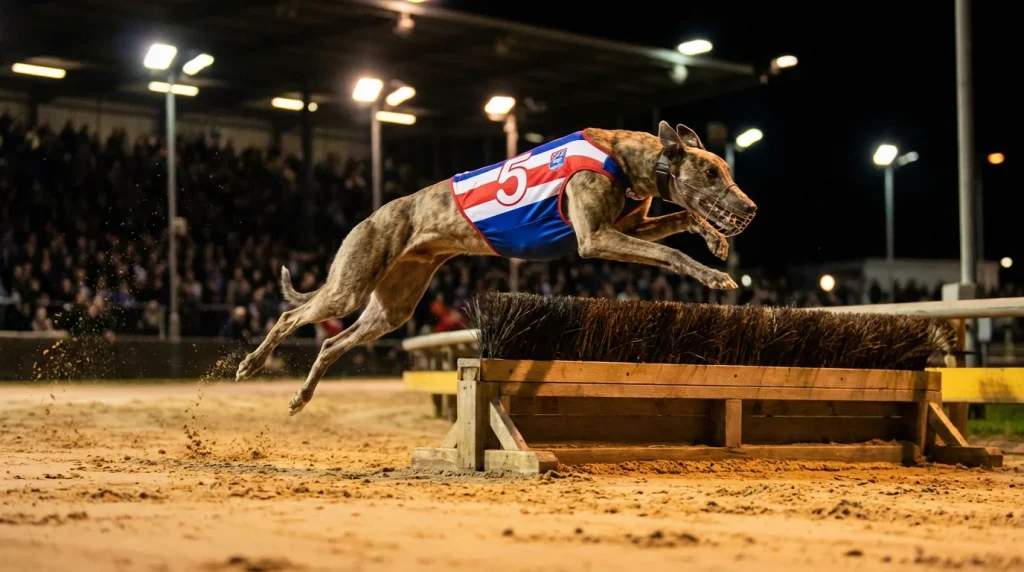
Hurdle racing is greyhound racing’s niche within a niche — a variant of the sport that most casual punters have barely heard of, let alone bet on. The concept is straightforward: greyhounds race over a series of low hurdles placed at intervals along the track, adding a jumping element to what is otherwise a flat-racing sport. The hurdles are small — typically around 25 centimetres high — and the dogs clear them at full stride rather than leaping in the way a horse negotiates a steeplechase fence. But the presence of obstacles changes the dynamics of the race in ways that create distinct form patterns and distinct betting opportunities.
Hurdle racing has never been the mainstream of UK greyhound racing. It accounts for a small fraction of the total race programme, and only a handful of tracks stage it regularly. But within that niche, it has a dedicated following among punters who appreciate its different form characteristics and among trainers who specialise in producing dogs that combine flat speed with the coordination to jump cleanly at pace.
How Hurdle Racing Differs from Flat
The most obvious difference is the hurdles themselves. These are lightweight, low-profile obstacles positioned at set intervals along the straights of the track. Dogs encounter them at full racing speed and are expected to clear them without breaking stride. A good hurdler barely adjusts its gait — it lifts its front legs slightly, clears the obstacle, and lands without losing momentum. A poor hurdler stutters, clips the hurdle, or breaks stride to jump rather than flowing over, losing half a length or more at each obstacle.
The hurdles are designed to give way if struck, reducing the risk of injury. They are not solid barriers, and a dog that clips a hurdle will usually continue racing without serious consequence beyond the lost ground. Occasionally a dog will fall or stumble badly enough to lose all chance, but catastrophic incidents are rare. The hurdles are an additional challenge, not a hazard.
The second difference is the distance. Hurdle races are typically run over middle or staying distances — 460 metres or more — because the hurdles need sufficient spacing to allow dogs to settle between jumps. Sprint hurdle races are essentially nonexistent; the distances are too short to incorporate meaningful obstacles. This means hurdle racing selects for a different type of greyhound: one with stamina, jumping ability, and the temperament to maintain focus over a longer race that includes repeated obstacles.
Form analysis in hurdle racing adds a variable that flat racing does not require: jumping ability. A dog’s flat-racing form is only partially relevant to its hurdle prospects. A fast flat dog that is a poor jumper will lose its speed advantage at the hurdles. A moderate flat dog that jumps cleanly and fluently can outperform its flat form by a significant margin. The racecard will usually note whether a dog has previous hurdle experience, and the remarks from previous hurdle runs will indicate whether it jumped well or poorly.
Crayford’s Hurdle Legacy
Crayford was one of the UK tracks that staged hurdle racing as part of its regular programme. The stadium’s compact 334-metre circuit and sand surface lent themselves to hurdle events, and the track hosted both graded hurdle races and the occasional open hurdle competition. Hurdle cards at Crayford were not as frequent as flat meetings — they were typically scheduled once or twice a month — but they attracted a dedicated subset of the Crayford racing community.
The hurdle grading at Crayford operated on a separate scale from the flat grades. A dog graded A4 over flat distances might be graded H2 (or equivalent) over hurdles, depending on its jumping ability and hurdle-specific form. This dual grading meant that some dogs had productive parallel careers: competitive at one level on the flat and at a different level over hurdles, racing in both disciplines throughout the week.
Several notable hurdle specialists raced at Crayford over the years. These dogs were often not the fastest on the flat but had the coordination, bravery and consistency to excel when the obstacles were in place. Their form profiles were distinctive: moderate flat grades but impressive hurdle records, with clean jumping noted repeatedly in the racecard remarks. For trainers who developed hurdle specialists, Crayford’s regular hurdle programme provided a reliable source of prize money and competitive racing.
The closure of Crayford in January 2025 removed one of the more active hurdle venues from the UK calendar. Dogs that had raced primarily over hurdles at Crayford needed to find new venues — not all of which offer hurdle racing at the same frequency or quality.
Which Tracks Still Offer Hurdles
Hurdle racing in the UK is concentrated at a limited number of licensed tracks. Not every GBGB venue stages hurdle events, and those that do vary in how frequently they schedule them. Among the tracks that have historically offered regular hurdle racing, several maintain active programmes in 2026.
Monmore Green in Wolverhampton is one of the more consistent hurdle venues, staging hurdle races as part of its regular meeting schedule. Perry Barr in Birmingham has also hosted hurdle events. In the south, tracks like Sittingbourne have included hurdles on selected cards, though the frequency varies.
The availability of hurdle racing can change from season to season, depending on track management decisions, the size of the local hurdle-dog population, and the demand from trainers. A venue that runs hurdles regularly one year might reduce its programme the next if insufficient entries make the cards unviable. Checking the current fixture list through the GBGB or through Premier Greyhound Racing’s schedule is the most reliable way to identify upcoming hurdle meetings.
For punters who want to specialise in hurdle betting, the limited number of venues is both a challenge and an opportunity. The challenge is volume: there are simply fewer hurdle races to bet on than flat races, which limits the number of betting opportunities in any given week. The opportunity is competition — or rather, the lack of it. Because fewer punters analyse hurdle form in depth, the markets for hurdle races can be less efficient than flat markets. A punter who invests the time to understand which dogs jump well, which trainers produce effective hurdlers, and which tracks favour particular running styles can find value that would be competed away in the deeper flat-racing markets.
Betting on Hurdle Races
The betting mechanics for hurdle races are identical to flat races. Win, each-way, forecast and tricast bets are all available, and the odds are formed through the same process of tissue pricing and market adjustment. The difference is in the form assessment.
Jumping ability is the primary additional factor. A dog’s hurdle record — how many hurdle races it has run, how many it has won, and whether the remarks indicate clean or clumsy jumping — should be the first thing you check. A dog switching from flat to hurdles for the first time is an unknown quantity over the obstacles, and its flat form is an incomplete guide. Backing first-time hurdlers is inherently riskier than backing dogs with proven jumping records.
The trap draw matters in hurdle racing, but its influence is slightly different from flat racing. The hurdles are positioned on the straights, not on the bends, so the geometric advantage of the inside trap through the turns is the same as on the flat. However, the hurdles can disrupt a dog’s stride pattern, and a dog that jumps slightly left or right will be affected differently depending on its position relative to other runners. A wide jumper drawn in trap 6 has room to jump freely; the same dog drawn in trap 2 might clip a hurdle while trying to avoid crowding from the rail runner.
Pace dynamics also shift in hurdle races. The hurdles act as natural speed checks — even the best hurdler loses a fraction of a second at each obstacle — which means that pure front-runners with blistering early pace are less dominant over hurdles than on the flat. Dogs that jump fluently and maintain their rhythm across the obstacles can gain ground on rivals who are faster on the flat but less efficient over the jumps. This creates opportunities to back dogs at longer prices whose flat form understates their hurdle ability.
Jumping Into the Unknown
Hurdle racing is not for every punter, just as it is not for every greyhound. It demands specialist knowledge that flat-only form analysis does not provide, and the smaller pool of races means fewer chances to apply that knowledge. But scarcity breeds inefficiency, and inefficiency breeds value. If you are willing to learn which dogs jump, which trainers teach them, and which tracks give them the best platform, hurdle racing is one of the few remaining corners of UK greyhound betting where careful analysis can find a genuine edge.