Hove Greyhound Racing: Track Guide and Tips
Best Greyhound Betting Sites – Bet on Greyhounds in 2026
Loading...
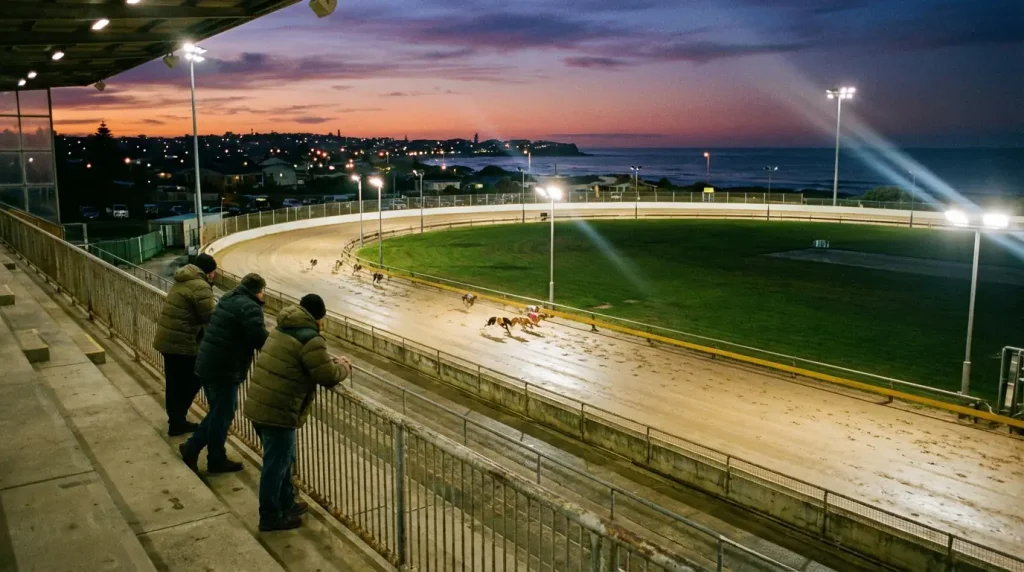
Hove has spent decades being the quiet achiever of UK greyhound racing. It doesn’t generate the headlines that London tracks attract and it doesn’t carry the weight of a Derby venue, but it runs a consistent programme, maintains a strong kennel base, and hosts several prestigious competitions that draw runners from across the country. For punters who valued Crayford’s regular schedule and reliable racing quality, Hove offers a comparable product — just sixty miles south on the Sussex coast.
The stadium, situated in the eastern part of Hove near the boundary with Brighton, has been a licensed greyhound venue since 1928. It has survived the waves of track closures that stripped London and the south-east of most of their greyhound infrastructure, and in 2026 it stands as one of the more established venues on the GBGB circuit. What makes it useful for bettors is not glamour but consistency: the track surfaces are well-maintained, the grading is competent, the meeting schedule is predictable, and the form data is deep enough to support serious analysis.
Track Layout and Distances
Hove’s circuit is an all-sand oval measuring approximately 455 metres in circumference — significantly larger than both Romford’s 350 metres and Crayford’s 334 metres. The track is left-handed, meaning dogs run clockwise, with four bends per standard-distance lap.
The run from the traps to the first bend is longer than Crayford’s was, giving dogs more time to find their position before the opening turn. This extra run-up has a measurable effect on the racing: early crowding is less frequent, slow breakers have a slightly better chance of recovering, and the first-bend leader’s advantage, while still significant, is less dominant than it was at Crayford’s compressed layout.
Race distances at Hove include a sprint trip (typically 285 metres), a standard middle distance (around 500 metres), and longer trips up to 740 metres for staying events. These distances differ from both Crayford’s and Romford’s lineups, which means form cannot be ported across tracks without adjustment. A calculated time over 500m at Hove tells you nothing directly about how the same dog would perform over 415m at a different venue. The distances demand separate analysis for each track.
The surface is consistent, well-drained sand that handles the south coast’s rainfall without frequent disruption. Going conditions at Hove tend to fall within a moderate range for most of the year, with occasional slow going during heavy rain and slightly fast going during summer dry spells. Track management has a good reputation for maintaining surface consistency, which in turn makes the calculated times at Hove more reliable as form indicators than at venues where the going swings more dramatically between meetings.
Key Competitions at Hove
Hove hosts several Category One and Category Two events that give the track a prominence beyond its regular graded programme. The Brighton Belle, a prestigious staying competition, is one of the marquee races on the Hove calendar. It attracts high-quality entries from across the UK and has been won by some notable greyhounds over the years.
The track also stages heats and rounds of nationally significant competitions when selected as a host venue by Premier Greyhound Racing. These events bring in runners from other tracks, raising the quality of the fields above the standard graded level and providing punters with a different type of betting challenge — assessing visiting dogs against the home kennel base, factoring in the adjustment to an unfamiliar track.
For regular Hove punters, the graded programme is the bread and butter. Evening meetings typically feature a mix of grades from A1 through to A8 or lower, supplemented by open races and occasional trial stakes. The BAGS schedule provides additional daytime racing for the bookmaker network. Between the two, Hove offers multiple meetings per week, generating a steady stream of form data and betting opportunities.
The presence of strong local kennels gives Hove’s graded racing a depth that some smaller tracks lack. Several experienced trainers are based in the Sussex area and race their dogs primarily at Hove, which means the form book for regular Hove runners tends to be deeper and more consistent than at tracks where the kennel base is thinner or more transient.
Trap Statistics and Bias
Every track has trap bias, and Hove is no exception. The left-handed configuration and specific bend geometry produce a pattern of trap advantage that differs from both Crayford’s right-handed bias and Romford’s profile. The inside traps — particularly trap 1 — benefit from the shortest route through the bends, as at every track. The question is how large the advantage is and how it varies by distance.
At Hove’s standard distance, the inside traps tend to perform slightly above expectation, but the wider circumference and longer run-up mean the advantage is less extreme than at tighter tracks. The outside traps are more competitive than they were at Crayford because the bends are gentler and the penalty for running wide is proportionally smaller per lap. Dogs with a wide running style that struggled at Crayford’s tight bends may find Hove’s configuration more accommodating.
The sprint distance at Hove, being longer than Crayford’s 238m, introduces more bending and therefore more trap influence. The staying distances at 740m involve enough laps that the cumulative distance penalty for wide running becomes significant again, and the inside traps regain some of their geometric advantage.
As with any track, the most reliable way to understand Hove’s trap statistics is to study the actual results data over a meaningful sample. Published trap statistics for Hove are available through results databases and racing data services. A sample of at least 500 races at the relevant distance is generally needed to establish whether a trap advantage is genuine or a product of random variation.
Betting Tips Specific to Hove
Hove’s consistency is its most exploitable characteristic for bettors. Because the track surface is well-maintained and the going tends to fall within a moderate range, calculated times at Hove are among the more reliable in UK greyhound racing. This means form comparisons between meetings at the same venue — the bread and butter of greyhound betting analysis — are more likely to be meaningful at Hove than at tracks where the surface conditions vary wildly.
The strength of the local kennel base also provides an edge for punters who invest time in learning the trainers. A handful of experienced Sussex-based trainers supply the majority of runners on any given Hove card. Tracking their strike rates by grade, distance and season builds a picture of which kennels are in form and which are not. Trainer form in greyhound racing is a genuine variable — a kennel in peak condition, with well-fed, well-trained dogs hitting their stride, can produce a string of winners across multiple grades. A kennel dealing with illness, injury or management issues can go quiet for weeks.
Visiting runners at Hove present a specific opportunity. Dogs racing at the track for the first time face the adjustment challenge: new surface feel, new bend angles, unfamiliar hare movement. First-time visitors underperform their form on average, and this tendency creates value on the home runners who face them. Conversely, a visiting dog that performs well on its first run at Hove is demonstrating adaptability — a positive signal for its next appearance.
The south coast location also introduces a mild seasonal factor. Summer meetings at Hove can coincide with warmer temperatures and firmer going, which some dogs prefer. Winter meetings may bring heavier surfaces and slower times. Tracking a dog’s performance across seasons — and noting whether its best runs cluster in warmer or cooler months — adds another layer to the form picture.
Consistency Under Floodlights
Hove does not dazzle. It does not produce the drama of a London stadium or the prestige of a Derby venue. What it offers is reliability: a well-run track with deep form data, competent grading, a stable kennel base, and enough racing to build a meaningful sample. For punters who treat greyhound betting as an analytical discipline rather than entertainment, reliability is worth more than spectacle. The data is there. The races are there. The rest is application.