Each-Way Betting in Greyhound Racing
Best Greyhound Betting Sites – Bet on Greyhounds in 2026
Loading...
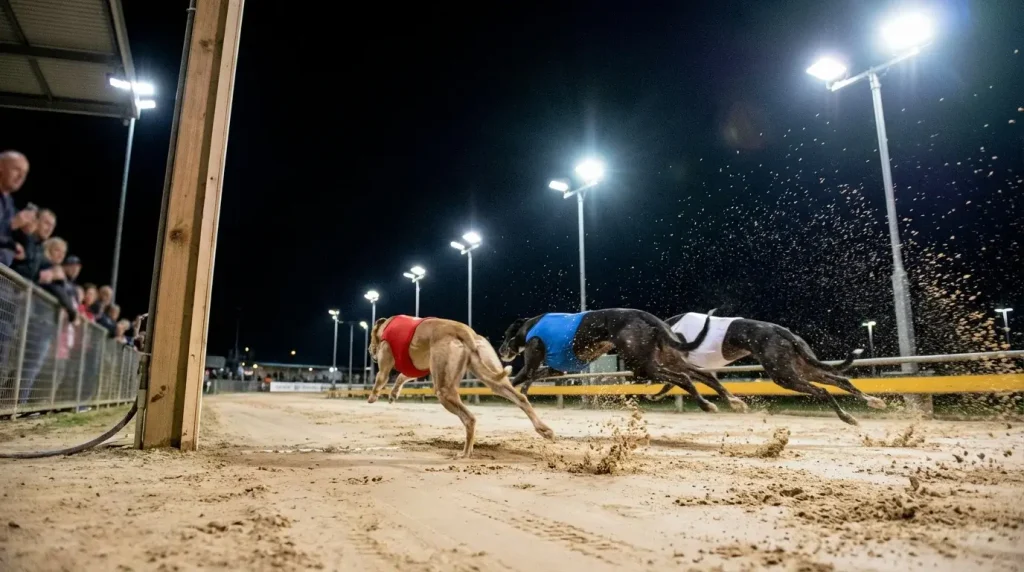
Each-way betting is the safety net that half the greyhound betting public uses without fully understanding. The idea is simple enough: you back a dog to win and place, splitting your stake into two halves. If the dog wins, both halves pay out. If it finishes in a place position but doesn’t win, only the place half pays out — at a fraction of the win odds. If it finishes outside the places, you lose both halves. The appeal is obvious: a partial return on a dog that ran well but didn’t quite get there. The reality is more nuanced, and whether each-way represents value or a slow leak of your bankroll depends entirely on the specific circumstances of each bet.
In greyhound racing, each-way terms are different from horse racing, and this is where the misunderstanding usually begins. The smaller field size — six dogs compared to ten, twelve or more in horse racing — changes the place terms, the implied probability of placing, and the overall value proposition. Getting the maths right is the foundation of making each-way work for you rather than against you.
How Each-Way Works in Six-Dog Races
An each-way bet in greyhound racing consists of two equal-stake bets: one on the dog to win and one on the dog to place. In a six-runner race, the standard place terms offered by UK bookmakers are 1/4 odds for first and second. This means only two places are paid, and the place odds are one quarter of the win price.
Working through the numbers: if you place a five-pound each-way bet at 6/1, your total stake is ten pounds — five pounds on the win and five pounds on the place. If the dog wins, you collect five pounds at 6/1 (thirty pounds plus your five-pound stake back) for the win part, and five pounds at 6/4 (seven pounds fifty plus your five-pound stake back) for the place part. Total return: forty-seven pounds fifty on a ten-pound outlay. If the dog finishes second, you lose the five-pound win stake but collect on the place: five pounds at 6/4 returns seven pounds fifty plus the five-pound stake, for a total of twelve pounds fifty. Against your ten-pound total stake, you are up two pounds fifty.
If the dog finishes third or worse, you lose the entire ten pounds. There is no third-place payout in standard six-runner greyhound racing each-way terms. This is the critical difference from horse racing, where larger fields often offer three or four place positions. In a six-dog race, only first and second pay on an each-way bet — which means your dog needs to beat at least four of its five rivals just to secure a partial return.
Some bookmakers occasionally offer enhanced each-way terms — paying three places instead of two, or at 1/3 odds instead of 1/4 — as a promotional offer on selected meetings. These enhanced terms improve the value of each-way bets significantly and are worth seeking out. But on standard terms, the two-place, 1/4 odds structure is what governs the vast majority of greyhound each-way betting.
Place Terms and Their Impact on Returns
The 1/4 odds for the place part of an each-way bet create a specific mathematical dynamic. At short prices, each-way betting produces very modest place returns that rarely justify the doubled stake. A dog at 2/1 each-way carries place odds of just 1/2 — a five-pound place stake returns only two pounds fifty in profit. If the dog finishes second and you’ve wagered ten pounds total, you are retrieving seven pounds fifty from a ten-pound outlay. A loss of two pounds fifty on a dog that ran well enough to finish second. That is not a consolation; it is a slow bleed.
The breakeven point — the price at which an each-way bet becomes mathematically defensible — depends on how often the dog places versus how often it wins. As a rough guide, each-way starts to offer structural value on dogs priced at 4/1 or longer. At these odds, the place return is meaningful enough to compensate for the doubled stake across a reasonable run of bets. Below 4/1, you are usually better off betting win-only at a single stake, because the place returns on short-priced dogs are too slim to offset the cost of the additional place wager.
At longer prices — 8/1 and above — each-way becomes more attractive because the place odds are genuinely rewarding. An 8/1 each-way bet pays 2/1 on the place part. A dog that finishes second at those terms returns fifteen pounds on a ten-pound total stake — a five-pound profit even without winning. If you have identified a dog at 8/1 that you believe has a strong chance of finishing in the first two but is not the most likely winner, each-way is the natural vehicle.
The pricing also interacts with the trap-draw analysis. Dogs drawn in positions with high place-finishing rates — trap 1 at Crayford historically, for instance, which finished in the top two over 37% of the time — were natural each-way candidates at mid-range prices. If the trap data says the dog is likely to be in the frame but the win market has it at 5/1 or longer, the each-way bet captures the place probability at a price that justifies the doubled stake.
When Each-Way Offers Genuine Value
Each-way is not a default strategy. It is a specific response to a specific situation: a dog that you believe has a significantly higher probability of placing than the odds imply. There are three common scenarios where this applies.
The first is a consistent place finisher at a price. A dog that has finished in the top two in four of its last six starts but has only won once might be priced at 5/1 or 6/1 because its win form is modest. But its place form is strong, and the each-way place terms at those prices are attractive. You are not betting this dog to win — you are betting it to finish in the first two, with the win part as a bonus if it gets there.
The second is a dog with a favourable trap draw for placing but not necessarily for winning. Trap 1 at many UK tracks produces more place finishes than wins, because the rail-running advantage saves ground consistently but doesn’t always translate into leading the race. A trap 1 dog at 5/1 or better on an each-way basis is betting on the geometry of the track rather than on the individual dog’s superiority.
The third is an each-way thief in an open race. When a high-profile competition attracts one or two clear class runners alongside several moderate ones, the market focuses heavily on the top dogs. A third runner with solid form but no realistic chance of beating the best in the field might be available at 8/1 or 10/1. Each-way on that dog is a bet that it finishes second behind the predictable winner — a scenario that is quite plausible in races with a clear quality gap.
Common Each-Way Mistakes
The most common error is backing short-priced dogs each-way. A 2/1 favourite each-way is almost never a value bet. The place odds are 1/2, the return on a place-only finish barely covers your combined stake, and you are tying up twice the money for minimal insurance. If you think the favourite will win, back it to win at single stakes. If you’re not confident enough to back it win-only, don’t bet.
The second mistake is treating each-way as a default on every race. Some punters place each-way bets on every selection as a matter of habit, regardless of the odds or the form. This doubles the total stake across a session and reduces the overall return unless the place-finish rate is genuinely high enough to justify it. Each-way should be a deliberate choice made on a race-by-race basis, not an automatic setting.
The third is ignoring the impact on your staking plan. A five-pound each-way bet costs ten pounds. If your bankroll management is based on five-pound units, each-way bets consume two units per race. Over a full evening card of twelve races, each-way betting on every selection would cost twice as much as win-only betting on the same races. The bankroll drain is real and often underestimated.
Half the Risk, Half the Thinking — or Not
Each-way feels like a hedge, and in a narrow sense it is — you get something back if the dog places. But a hedge has a cost, and in greyhound racing the cost is the doubled stake combined with place terms that are structurally mean at short prices. Use it when the odds are right, the place probability is high, and the maths justifies the extra outlay. Avoid it when the price is short, the field is competitive, or you’re using it to avoid committing to a proper opinion on the winner. Each-way done right is selective and data-driven. Done wrong, it is just two bets instead of one, both losing.