Greyhound Racing Betting Exchanges Explained
Best Greyhound Betting Sites – Bet on Greyhounds in 2026
Loading...
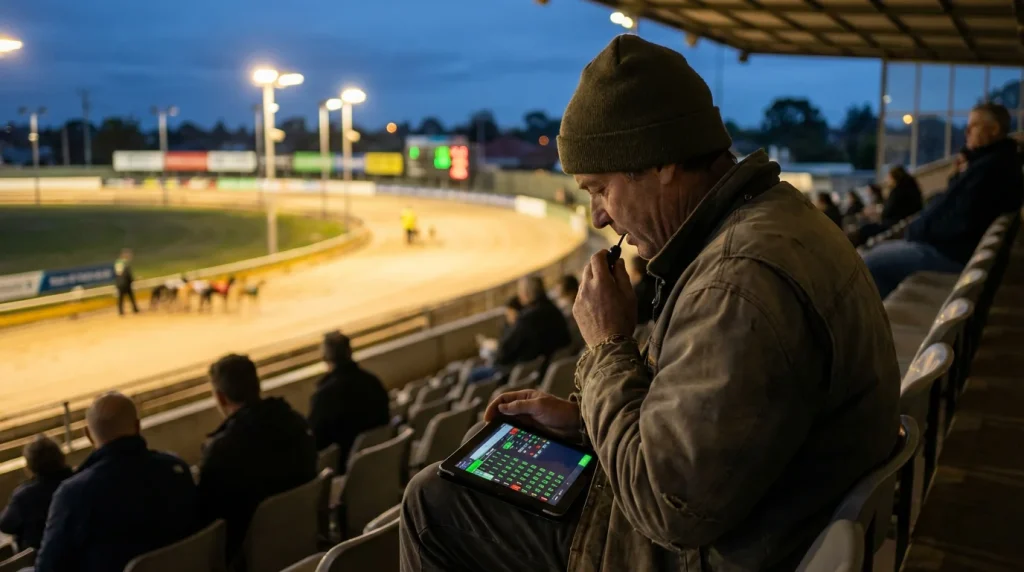
A betting exchange lets you bet against other punters instead of against a bookmaker. That single difference changes the economics of greyhound betting in ways that most casual bettors don’t fully appreciate. On an exchange, you can back a dog to win — just like placing a bet with a traditional bookmaker — but you can also lay a dog, effectively betting that it will lose. The prices are set by the market, not by an odds compiler, and the exchange takes a commission on winning bets rather than building a margin into the odds themselves.
For greyhound racing, exchanges occupy a niche. The liquidity — the volume of money available at any given price — is dramatically lower than in horse racing markets, and some greyhound races attract so little exchange activity that the market barely functions. But for punters who understand the mechanics and choose their spots, exchanges offer genuine advantages that the traditional bookmaker model cannot match: better prices on selected outcomes, the ability to trade positions, and a structural fairness that comes from peer-to-peer pricing rather than bookmaker overround.
How Exchanges Differ from Bookmakers
The fundamental difference is who sets the odds. At a bookmaker, the odds are compiled by the operator’s trading team and adjusted as money flows in. The bookmaker builds a margin — the overround — into the prices, ensuring that the combined implied probabilities of all outcomes exceed 100%. A typical greyhound race at a bookmaker might carry an overround of 115-125%, meaning the house retains a theoretical edge on every race regardless of the result.
On an exchange, the odds are set by the bettors themselves. A punter who wants to back a dog at 5.0 (4/1) places that request on the exchange. Another punter who is willing to lay the same dog at 5.0 matches the request. The exchange facilitates the transaction and charges a commission — typically 2-5% — on the net winnings of the winning side. The overround on exchange markets tends to be much lower than at bookmakers, often hovering around 102-105% in liquid markets, which means better effective odds for both backers and layers.
This structural advantage is the exchange’s primary selling point. On a well-functioning exchange market, the back price for a given dog will often be higher than the price offered by any traditional bookmaker. The difference might be half a point or a full point on the decimal odds scale — the equivalent of getting 9/2 on an exchange when the best bookmaker price is 4/1. Over hundreds of bets, that price improvement compounds into a significant edge.
The catch is liquidity. Horse racing exchanges attract millions of pounds per race on major meetings. Greyhound racing exchanges attract far less — sometimes only a few hundred pounds per market, and occasionally even less on daytime BAGS meetings or lower-profile evening cards. Low liquidity means that the prices displayed may not be available in meaningful amounts. You might see 6.0 offered on a dog, but only for a five-pound stake. If you want to bet fifty pounds, you may have to accept a lower price or wait for more money to appear in the market — which, in a greyhound race that starts in ten minutes, may not happen.
Laying Greyhound Bets
Laying is what makes exchanges genuinely different from bookmakers. When you lay a dog, you are betting that it will not win. You are, in effect, acting as the bookmaker for that specific outcome. If the dog loses, you collect the backer’s stake (minus commission). If the dog wins, you pay out at the agreed odds.
The maths of laying is straightforward but demands respect. If you lay a dog at 5.0 for a ten-pound stake, your liability is forty pounds — the amount you would need to pay the backer if the dog wins (the odds minus one, multiplied by the stake). If the dog loses, you collect ten pounds minus the exchange’s commission. The risk-reward ratio on a lay bet is inverted compared to a back bet: you are risking more than you stand to gain, but you are also betting on a more likely outcome (the dog not winning, which happens roughly five out of six times in a six-runner race).
In greyhound racing, laying has practical applications. If your form analysis identifies a dog that the market has priced too short — a favourite at 2.5 that you believe has only a 25% chance of winning rather than the 40% implied by its odds — laying that dog is the direct expression of your view. You don’t need to identify the winner; you only need to be right that the favourite is overvalued. This is a fundamentally different discipline from backing, and some punters find it more natural: it is often easier to identify a dog that won’t win than to pinpoint the one that will.
The risk of laying is concentrated in short-priced runners. Laying a 1.5 favourite for a ten-pound stake means a five-pound liability, which is manageable. Laying a 10.0 outsider for the same stake means ninety pounds at risk, which most punters would consider reckless. Successful laying in greyhound racing tends to focus on the 2.0 to 4.0 price range — dogs that are favoured but not dominant, where the market’s assessment is most likely to contain errors.
Trading In-Play on Dog Racing
Exchange markets remain open during the race, and prices update in real time as the action unfolds. This creates the possibility of trading — backing a dog before the race and laying it during the race (or vice versa) to lock in a profit or limit a loss regardless of the outcome.
In practice, in-play trading on greyhound races is extremely difficult. The races are short — thirty seconds or less for most trips — and the exchange’s latency plus the stream delay means that by the time you see the traps open and assess the early positions, the market has already moved. Professional exchange traders use automated systems and low-latency data feeds to exploit in-play greyhound markets, and competing against them manually is almost impossible.
Pre-race trading is more accessible. If you back a dog at 6.0 an hour before the race and its price shortens to 4.0 as the off approaches, you can lay it at 4.0 to guarantee a profit regardless of the result. The profit is the difference between the two prices minus commission. This strategy requires accurate reading of how the market will move — essentially predicting not who will win the race but where the money will flow before it starts. For greyhound racing, where markets are thinner and more volatile than horse racing, pre-race price movements can be sharp and difficult to anticipate.
Commission, Liquidity and Limitations
Exchange commission is charged on net winnings. The standard rate varies by platform, typically falling between 2% and 5%. Some exchanges offer reduced commission rates for high-volume customers or as part of promotional deals. The commission is a cost that must be factored into any exchange strategy: a winning bet at 5.0 with a 5% commission has an effective return of 4.80 rather than 5.0, which reduces the price advantage over bookmakers by a meaningful margin.
Liquidity remains the most significant limitation for greyhound exchange betting. The volume of money in greyhound markets is a fraction of what is available in horse racing. On major horse racing days, exchange markets can sustain six-figure sums on a single race. On a Tuesday afternoon greyhound meeting, the entire market for a race might hold a few hundred pounds. This means larger stakes are harder to place, prices can move dramatically on relatively small bets, and the advertised odds may not be available when you try to act on them.
Not every race has a functioning exchange market. Lower-profile BAGS meetings and less popular tracks may have no exchange activity at all, meaning the market is effectively empty. Evening cards at major tracks — Romford, Hove, Monmore — tend to generate more activity, but even there, the liquidity is modest compared to horse racing. For punters who want to exchange-bet on greyhounds regularly, selecting meetings with sufficient market depth is a practical necessity.
Exchange or Bookie — There Is No Universal Answer
Exchanges suit punters who want flexibility, better odds on selected outcomes, or the ability to lay. Bookmakers suit punters who want guaranteed liquidity, BOG offers, each-way and forecast markets, and the simplicity of a fixed price. Most serious greyhound bettors maintain accounts with both and use each where it offers the best value for the specific bet they want to place. The exchange is a tool, not a philosophy. Use it when it works. Use the bookmaker when it doesn’t.