UK Greyhound Racing Tracks: The Complete Guide to Every Licensed Venue
 Available in US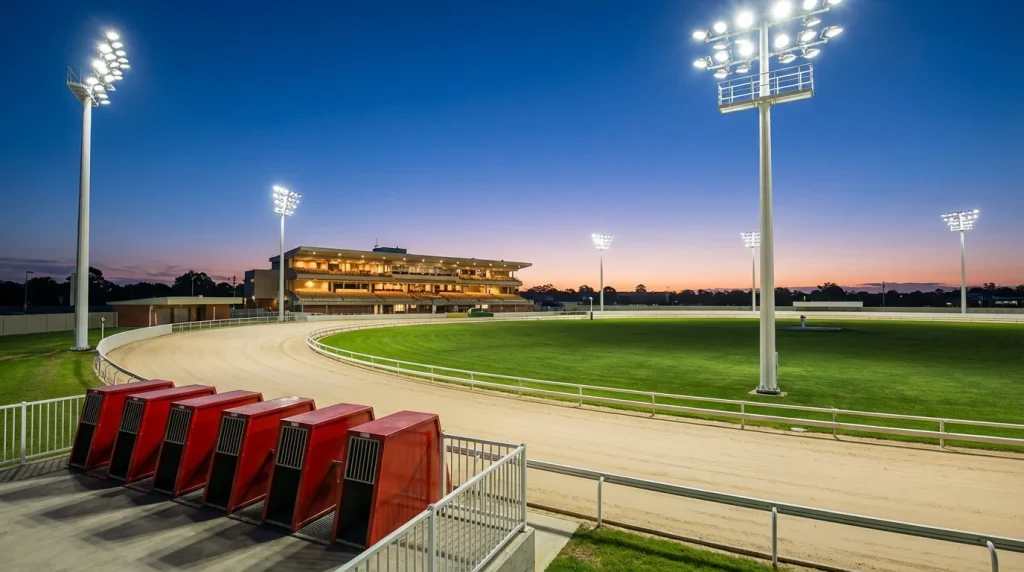
Eighteen Tracks, One Sport, Very Different Odds
There are eighteen active GBGB-licensed greyhound tracks in the United Kingdom, and every one of them runs differently. The GBGB oversees venues from Brighton and Hove on the south coast to Newcastle in the north-east, with circuits ranging from tight 334-metre ovals to larger galloping tracks of 460 metres or more. The distances, surfaces, bend configurations, and trap biases vary from one stadium to the next — which means form earned at one track does not transfer automatically to another. Find more track guides at crayfordgreyhound.
This matters for punters, and it matters especially now. Crayford’s closure in January 2025 displaced trainers, dogs, and an entire community of regular bettors who knew that track’s characteristics inside out. Those punters are now studying new venues, learning new trap statistics, and adjusting their form reading for circuits that bear little resemblance to the 334-metre sand oval they spent years analysing. The transition is not trivial. A dog that won consistently at Crayford from trap one over 380 metres might struggle at a track with a longer run to the first bend and a wider circumference. The trap advantage shifts, the split times change, and the race dynamics reconfigure.
This guide covers every active GBGB-licensed venue in the United Kingdom, grouped by region. It provides the essential information a bettor needs to assess each track: circumference, distances, surface type, key competitions, and the characteristics that define the racing there. It then compares the venues head-to-head on the variables that matter most for form reading and concludes with practical advice for punters choosing a new home track.
The number of licensed tracks has declined sharply over the past eighty years. In the 1940s, there were seventy-seven licensed and more than two hundred independent venues. London alone had thirty-three stadiums. As of 2026, the GBGB oversees eighteen active tracks across England and Wales, with none in Scotland. The Welsh Government announced plans in February 2025 to ban greyhound racing, which would remove Valley Stadium in Ystrad Mynach from the circuit. Every track profiled below is a survivor of this contraction — and every one of them deserves to be understood on its own terms rather than treated as a generic substitute for anywhere else.
London and South East Tracks
After Crayford, London punters are left with Romford — and it’s a different animal. The south-east of England, which once hosted a dozen greyhound stadiums within the M25, now has just three GBGB-licensed venues: Romford in east London, Brighton and Hove on the Sussex coast, and Central Park in Sittingbourne, Kent. Harlow, in Essex, sits on the fringes and serves some of the London market, though it is technically outside the capital.
Romford
Romford is the last greyhound stadium physically within London, located in the London Borough of Havering. Its circuit circumference of approximately 375 metres makes it slightly larger than Crayford’s 334-metre oval, with a correspondingly longer run to the first bend. Racing distances include 225, 400, 575, and 750 metres. The track runs on sand and is right-handed, as are all UK greyhound tracks.
For Crayford regulars, the adjustment to Romford requires recalibrating trap expectations. The wider circuit reduces the inside-trap advantage compared to Crayford’s tighter bends, and the 400-metre standard distance is longer than Crayford’s 380-metre sprint. Dogs with strong early pace but limited stamina may find the extra distance testing. Romford hosts the Coral Essex Vase over 575 metres and the Coral Golden Sprint over 400 metres, both Category One events. It races regularly throughout the week and has strong SIS and RPGTV coverage, making it the most accessible London track for off-course bettors.
Hove and Sittingbourne
Brighton and Hove Greyhound Stadium — universally referred to as Hove — is one of the most respected tracks in the country. Located on Nevill Road in Hove, it has a circumference of approximately 377 metres and races over 285, 500, 695, and 880 metres. The track was home to Ballyregan Bob, who broke the world record for consecutive wins with his thirty-second successive victory in December 1986. Hove hosts the Coral Brighton Belle and several other prestigious events, and its training colony has historically produced strong open-race performers.
For betting purposes, Hove offers consistently competitive cards with full six-dog fields in most graded races — something that became increasingly rare at Crayford in its final years. The 500-metre standard distance is significantly longer than anything Crayford ran regularly, which means form over Crayford’s 380 and 540 metres does not map neatly onto Hove’s programme. Trap statistics also differ: Hove’s wider bends reduce the extreme inside-trap bias that defined Crayford.
Central Park in Sittingbourne is the other Kent option, located about thirty miles east of where Crayford stood. It races over 275, 480, 660, and 870 metres on a 400-metre circumference track and hosts the Cesarewitch and the Kent Plate among its major events. Sittingbourne is a mid-tier venue in terms of competition quality but offers regular BAGS meetings that are widely available through off-course bookmakers. For punters who valued Crayford’s Kent location and its convenience for south-east-based trainers, Sittingbourne is the geographically closest alternative.
Midlands and Northern Tracks
Sheffield, Monmore, Perry Barr and Nottingham form the backbone of Midlands racing. These four venues, along with Towcester in Northamptonshire, account for a large share of the UK’s graded and open-race programme. They are also the tracks most likely to feature on RPGTV evening broadcasts, which makes them familiar to off-course punters even if they have never visited in person.
Sheffield and Nottingham
Owlerton Stadium in Sheffield is one of the premier greyhound venues in the country. Its 400-metre-plus circumference makes it a genuine galloping track — a significant contrast to Crayford’s tight oval. Racing distances include 280, 480, 660, and 900 metres, with the 500-metre trip used for several Category One events including the Steel City Cup and the Gymcrack. Sheffield’s larger circuit means wider bends, a longer run to the first turn, and less pronounced trap bias. Dogs that rely on an inside draw and a fast break to dominate at smaller tracks may find Sheffield’s more open geometry less forgiving. Sheffield was shortlisted for GBGB’s inaugural Track of the Year Award in 2025, a reflection of its facilities, atmosphere, and competitive racing.
Nottingham Greyhound Stadium, located at Colwick Park, operates on a similar scale. Its circuit circumference is approximately 400 metres, and it races over 305, 500, 680, and 880 metres. Nottingham hosts the BGBF British Breeders Stakes and several other prestigious events. The track secured a fifty-year lease extension from the local council, providing long-term stability that few UK greyhound venues can match. For punters looking for a venue with staying power — in both the sporting and business sense — Nottingham is one of the safer bets.
Monmore, Perry Barr, Towcester
Monmore Green in Wolverhampton is an Entain-operated track, making it a corporate sibling of the now-closed Crayford. It races over 264, 480, 630, and 840 metres on a 375-metre circuit and hosts the Ladbrokes Winter Derby and the Premier Greyhound Racing Puppy Derby, both Category One events. Monmore was also shortlisted for Track of the Year in 2025. Its Entain ownership means best odds guaranteed is typically available through Ladbrokes, which gives it a specific betting advantage for punters who valued the BOG facility at Crayford.
Perry Barr in Birmingham has a larger circumference of 434 metres and races over 275, 480, 660, and 915 metres. It hosts the Laurels, one of the sport’s oldest Category One events. Perry Barr’s wider track creates a different race dynamic from Monmore despite both being in the West Midlands — the extra width gives outside runners more room, and the 480-metre standard distance plays slightly differently on the bigger circuit.
Towcester Racecourse in Northamptonshire is the newest addition to the GBGB circuit and arguably the most modern. Originally a horse racing venue, it added a greyhound track and now hosts the Star Sports and TRC English Greyhound Derby — the sport’s most prestigious competition, carrying a winner’s prize of one hundred and seventy-five thousand pounds. Towcester also runs the TV Trophy, the Blue Riband, and the Juvenile Classic. Its 445-metre circumference is the largest on the GBGB circuit, making it a genuine stayers’ track. Distances include 270, 500, 712, and 943 metres. For punters accustomed to Crayford’s tight sand oval, Towcester represents the opposite end of the spectrum — a big, galloping circuit where stamina and mid-race pace matter more than trap speed.
Scotland, North East and Others
Newcastle, Sunderland and Kinsley keep the northern circuits alive. The north-east of England retains a modest but active greyhound scene, with Newcastle Stadium and Sunderland Stadium providing regular GBGB racing and Pelaw Grange near Chester-le-Street operating as a smaller venue. Kinsley, in West Yorkshire, rounds out the northern presence. Together with Sheffield, these tracks mean that punters north of Birmingham have multiple options within reasonable travelling distance — though none offer the density of meetings that the south-east once provided.
Newcastle Stadium hosts the Arena Racing Company Northern Puppy Derby and the Angel of the North among its feature events. It races over 280, 480, and 640 metres on a track that favours pace and early speed. Sunderland, roughly fifteen miles south, runs over 265, 450, 640, and 835 metres and hosts the Grand Prix at 640 metres. Both tracks broadcast regularly via SIS, making them accessible to the off-course market.
Pelaw Grange, a successful independent track before gaining GBGB licensing in 2005, has a 345-metre circumference — close to Crayford’s 334 metres — and races over 280, 480, and 660 metres. Its compact circuit produces similar trap dynamics to Crayford, with inside draws carrying a noticeable advantage over shorter distances. For punters who built their form-reading skills on Crayford’s tight bends, Pelaw Grange is structurally the closest equivalent in the GBGB network, though it is three hundred miles north of Bexley.
Beyond the north-east, the remaining GBGB tracks are scattered across England and Wales. Harlow in Essex races over 238, 415, 592, and 769 metres. Suffolk Downs in Mildenhall and Yarmouth Stadium serve East Anglia. Doncaster provides coverage in South Yorkshire. Oxford and Swindon cover the Thames Valley and south-west corridor. Valley Stadium in Ystrad Mynach is the only licensed track in Wales, though its future is uncertain following the Welsh Government’s announcement in February 2025 of plans to ban greyhound racing on animal welfare grounds. Each of these venues has its own circuit geometry, distance menu, and trap characteristics — and each requires independent study before committing betting money.
Comparing Tracks: Surface, Circumference, Distances
No two UK tracks measure the same, and the differences aren’t cosmetic. Three variables matter most when comparing greyhound venues: circuit circumference, run to the first bend, and racing distances. These are the numbers that determine trap advantage, race shape, and the type of dog that thrives at each venue.
Circuit circumference ranges from around 334 metres at the smallest tracks to 445 metres at Towcester. The smaller the circuit, the tighter the bends. Tight bends amplify inside-trap advantage because the dog in trap one has less ground to cover on the turn. They also increase the risk of crowding, because six dogs entering a tight bend at speed creates congestion. Larger circuits spread the field more evenly, give outside runners a fairer chance, and produce more open racing. As a general rule, form from a tight track should be read with extra attention to trap draw, while form from a large track can be assessed more on raw ability and sectional speed.
The run to the first bend — the distance from the starting boxes to where the circuit curves — determines how much time dogs have to establish position before the bunching starts. A short run to the bend means fast breakers dominate: there is simply not enough straight track for slower starters to find space. A longer run allows more jockeying for position and reduces the penalty for a marginally slower trap break. At Crayford, the short run to the bend was one of the defining features: dogs that missed the break from inside traps were immediately compromised. At Towcester, where the run-up is substantially longer, a slow break is more recoverable.
Racing distances interact with circumference to define the race profile. A 480-metre race at a 334-metre circuit involves more bends than a 480-metre race at a 430-metre circuit. More bends mean more opportunities for crowding and checking, more inside-rail advantage, and a greater premium on early pace. Fewer bends mean a more galloping race where mid-race speed and stamina carry more weight. Punters transitioning between tracks need to understand that the same numerical distance does not produce the same type of race at different venues.
All GBGB tracks run on sand or fibresand, but surface composition varies. Some tracks run slightly faster in specific conditions — a dry summer evening versus a wet winter afternoon — and the going adjustments published for each meeting reflect this variation. Calculated times correct for going at any given meeting, but they do not correct for the permanent baseline differences between track surfaces. A calculated time of 29.10 at Romford and 29.10 at Monmore represent similar quality on paper, but the dogs have achieved those times on different surfaces with different bend geometries and different runs to the bend. Direct cross-track time comparison is useful as a rough guide, not as a precise equivalence.
For serious form students, the solution is to build track-specific benchmarks. Know the average winning time for each distance and grade at the tracks you follow. Know which trap wins most often over each distance. Know whether the inside-trap advantage holds across all distances or only shorter ones. This data is available through GBGB records and specialist form databases, and it is the foundation of any cross-track analysis.
How to Choose Your Next Track After Crayford
Your form knowledge from Crayford doesn’t transfer directly. Here’s how to adapt. The most common mistake displaced punters make is assuming that what worked at their home track will work elsewhere. Crayford’s tight circuit, short run to the bend, and pronounced inside-trap bias created specific winning patterns. Those patterns do not replicate at Romford, Hove, or Towcester. The dogs might be the same — many Crayford regulars moved to other tracks after the closure — but the circuits are different, and the circuits define the racing.
Start by matching your preferred betting style to a track’s characteristics. If you built your Crayford strategy around trap-draw analysis and fast-break selections, look for tracks with similar tight geometries. Pelaw Grange has a 345-metre circumference and comparable bend tightness, though it is geographically distant. Sittingbourne’s 400-metre circuit is slightly larger but still compact enough for inside-trap advantage to matter over shorter distances. If your approach was more based on sectional times and mid-race pace, the bigger circuits — Sheffield, Nottingham, Towcester — reward that analytical style more effectively.
Consider meeting frequency and coverage. Crayford ran meetings on multiple days per week across morning, afternoon, and evening slots. Not every alternative track offers the same breadth. Romford has a strong weekly schedule and full SIS coverage, making it the most direct replacement for punters who want regular London-area racing. Hove runs a consistent programme with quality fields. For off-course bettors who relied on BAGS meetings available in betting shops, tracks like Sittingbourne, Monmore, and Sunderland provide regular daytime racing that is widely broadcast.
The bookmaker landscape also varies by track. Best odds guaranteed, live streaming availability, and the range of bet types offered can differ depending on which venue you are betting on. Entain-operated tracks like Monmore and Romford tend to have strong coverage through Ladbrokes and Coral. ARC-affiliated tracks may have stronger coverage through SIS-connected bookmakers. Check which tracks your preferred bookmaker covers before committing — there is no point building expertise on a venue whose races your bookmaker does not consistently stream or price.
Finally, give yourself a transition period. Study the new track’s results for at least two weeks before betting seriously. Learn the trap statistics by distance. Identify which trainers dominate the local graded programme. Note the going patterns — does the track tend to run fast or slow at certain times of year? This groundwork is identical to what you did, consciously or not, when you first started betting at Crayford. The only difference is that you are doing it again, at a venue with different numbers.
The Circuit Keeps Shrinking — But Not the Data
Every closed track was somebody’s home track. The sport survives on the ones still standing. UK greyhound racing has contracted from over seventy licensed venues in the 1940s to eighteen active GBGB tracks today. The trend line is clear, and denial serves no one.
What the remaining tracks offer, though, is genuine quality. The Derby at Towcester, the Essex Vase at Romford, the Steel City Cup at Sheffield — these are competitive events that attract the best dogs in the country. The graded racing at venues like Hove, Monmore, and Nottingham produces full fields and honest form that rewards analytical betting. The infrastructure is smaller, but the racing product is not diminished.
For displaced Crayford punters, the transition to a new track is an opportunity to sharpen skills that may have become habitual. Every new circuit requires fresh analysis. Every unfamiliar trap-draw statistic is a chance to find an edge that the market has not yet priced in. The punter who does the work — studying the new track’s geometry, learning its going patterns, identifying which trainers and dogs transfer their form from other venues — will be better placed than the one who simply picks the favourite and hopes. Also read our Romford greyhound guide.
The data that matters is not locked inside any one stadium. It lives in the results databases, the form books, and the statistical records that cover every GBGB track. The circuit keeps shrinking. The information available to the informed punter keeps growing. That imbalance is, if nothing else, a reason for cautious optimism.
