Greyhound Betting Types and Strategies: The Punter's Playbook
 Available in US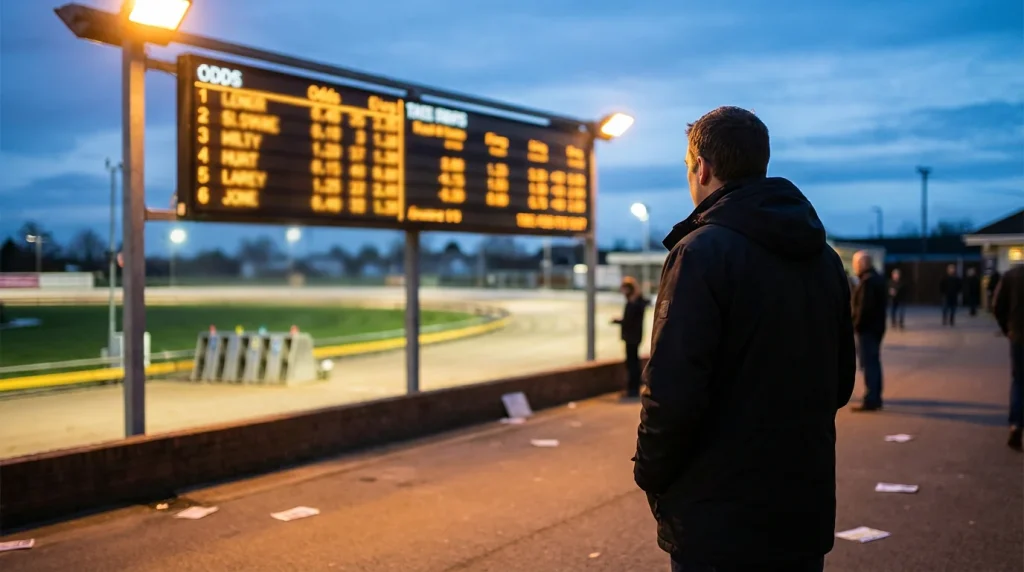
Six Dogs, Six Traps, Dozens of Ways to Bet
Greyhound betting is faster than horse racing — six runners, no jockeys, thirty seconds. A twelve-race evening card runs through in under three hours, and every race offers a stack of market options that most casual punters never explore beyond picking a winner. That is a missed opportunity. The range of bet types in greyhound racing exists because six-dog fields produce specific probability structures that reward different approaches depending on how much homework you have done. Find more strategy guides at crayfordgreyhound.
A horse race might have fourteen runners, a jockey booking that swings the odds, and a going report that changes between the morning declaration and the afternoon start. Greyhound racing strips most of that away. The traps open mechanically. The dogs run on instinct and preparation. The variables are narrower and more quantifiable: trap draw, early pace, running style, grade, and track conditions. That simplicity makes the sport accessible to new bettors but also creates an environment where informed punters can find edges that the market undervalues — particularly in combination bet types like forecasts and tricasts.
This guide covers every standard bet type available on UK greyhound racing, from the basic win and place through to accumulators and combination exotics. It explains how greyhound odds work in fractional and decimal formats, how starting price differs from early market prices, and why prices move in the minutes before a race. It then moves into strategy — how to use form, trap draws, and value assessment to move from punting to investing, or at least from guessing to calculating. The final section covers the most common mistakes that drain bankrolls, because knowing what not to do is often worth more than knowing what to do.
Whether you are placing your first ever greyhound bet or recalibrating your approach after Crayford’s closure forced you to study new tracks in 2025, the bet types and strategic principles are universal. The bookmaker does not change its margin because the venue changed. The punter who understands that margin has the first advantage.
Single Bets: Win, Place and Each-Way
Win is binary. Place gives you a safety net. Each-way combines both — at a cost. These three bets form the foundation of greyhound wagering, and the vast majority of casual bettors never go beyond them. That is not necessarily a mistake. For many race cards, a well-timed win or each-way bet on a form selection is the most efficient way to play. The key is understanding exactly what each bet offers and when it represents fair value.
A win bet is the simplest construction in betting. You back a dog to finish first. If it wins, you collect your stake multiplied by the odds. If it finishes second, third, or anywhere else, you lose your stake. In a six-dog greyhound race, the random probability of any single runner winning is roughly 16.7 percent. The odds should theoretically reflect each dog’s actual chance of winning, but in practice the market builds in an overround — the bookmaker’s profit margin — which means the combined implied probabilities of all six dogs exceed one hundred percent. A typical greyhound market might carry an overround of eight to twelve percent, which is lower than horse racing but higher than many exchange markets.
A place bet pays out if your dog finishes in one of the designated places, typically first or second in a six-runner race. The place terms vary by bookmaker and field size. In greyhound racing, where fields are capped at six, the standard offering is two places. Some bookmakers offer one-two-three places as a promotional enhancement, but this is not the norm. Place odds are usually calculated at a fraction of the win odds — commonly one quarter. So if a dog is 4/1 for the win, the place odds are typically 1/1 (evens). That fraction is set by the bookmaker and represents a significant chunk of the margin.
Each-way is two bets in one: a win bet and a place bet, at equal stakes. If you place a five-pound each-way bet, you are staking five pounds on the win and five pounds on the place — ten pounds total. If the dog wins, you collect on both the win and the place portion. If it finishes second, you lose the win portion but collect on the place. If it finishes third or worse, you lose both stakes. Each-way betting is often marketed as a safer option, and in one sense it is — you get something back if the dog places. But it doubles your exposure. A five-pound each-way bet on a 3/1 shot that finishes second returns just three pounds seventy-five pence on the place leg (at one-quarter odds), against a ten-pound total stake. You lose six pounds twenty-five pence. The safety net has a price.
When does each-way make sense? Generally, when the win odds are long enough that the place portion alone represents value. Backing a 10/1 shot each-way gives you place odds of 5/2 — meaning a five-pound place stake returns seventeen pounds fifty for a placed finish. Against a ten-pound total outlay, that is a profit even without the win. At shorter prices, each-way is almost always worse value than a straight win or a straight place bet. If you think a dog will win, back it to win. If you think it will place but probably not win, a place-only bet avoids the win-leg dead money.
Forecast and Tricast Bets
Predicting two or three dogs in exact finishing order sounds ambitious, but the payouts reflect the difficulty. Forecast and tricast bets are where greyhound form reading translates most directly into profit, because they reward the punter who can assess race shape — not just the winner, but the sequence of finishers. In a six-dog field, the number of possible exact-order outcomes is manageable enough that informed analysis has a genuine edge over random selection.
A straight forecast requires you to predict the first and second finishers in the correct order. In a six-dog race, there are thirty possible first-second combinations (six possibilities for first, multiplied by five remaining for second). If the market were perfectly efficient and all dogs had equal ability, a straight forecast should pay 29/1. In practice, forecast payouts are calculated by a computer using a formula based on the win odds of the two dogs involved. A forecast combining the 2/1 favourite first and the 4/1 second favourite second might return around 12/1. The same combination reversed — the 4/1 shot first, the favourite second — might pay 18/1 or more, because it is a less likely outcome according to the win market.
A reverse forecast covers both possible orders: dog A first and dog B second, or dog B first and dog A second. It costs twice the stake of a straight forecast but removes the need to predict the exact sequence. A five-pound reverse forecast is two five-pound bets — ten pounds total. If either combination lands, you collect on the winning leg. Reverse forecasts are popular with punters who have identified the two most likely finishers but cannot separate which will win.
A combination forecast covers all possible first-second pairings from a selected group of dogs. If you select three dogs, you get six straight forecast combinations (three choices for first, two remaining for second). At five pounds per line, that is a thirty-pound total stake. The returns can be substantial if a longer-priced dog finishes first, but the stake commitment is significant, and most combination forecasts lose money over time unless the selections are sharp.
Tricast bets extend the principle to three finishers. A straight tricast requires the first, second, and third in exact order. In a six-dog race, there are 120 possible exact trifecta combinations (six times five times four). Straight tricast payouts are correspondingly higher — a tricast involving three mid-priced dogs can return fifty to one hundred times the stake or more. A combination tricast covers all possible orderings of your selected dogs. Three dogs give you six combinations; four dogs give you twenty-four. The stake scales quickly.
The strategic value of forecast and tricast betting in greyhound racing lies in the small field size. With only six runners, a punter who has done serious form work can realistically narrow the first three places to three or four dogs. At that point, a combination tricast covering those selections captures most of the likely outcomes at a manageable cost. Contrast that with horse racing, where a fourteen-runner handicap makes tricast selection almost a lottery. The six-dog structure is the reason greyhound forecast and tricast markets are worth studying. The field is small enough for analysis to matter.
Accumulator and Multi-Race Bets
Accumulators multiply excitement and risk in equal measure. A greyhound accumulator links two or more selections across different races into a single bet, with the winnings from each selection rolling onto the next. A four-fold accumulator on four dogs at 2/1 each produces a theoretical return of eighty times the stake if all four win. The catch — and it is a substantial one — is that all selections must win. One loser and the entire bet is void.
The mathematics of accumulators work heavily in the bookmaker’s favour. Each leg of the accumulator carries its own overround, and those margins compound. If each individual market has an eight percent overround, a four-fold accumulator effectively carries a compounded margin closer to thirty percent. The bookmaker’s edge grows with every leg you add. This is why accumulators are aggressively promoted — they are among the most profitable bet types for the operator.
That said, accumulators have a legitimate place in a disciplined betting strategy when used sparingly and with strong selections. A double (two legs) on two well-analysed greyhound races carries a manageable compounded margin and can offer a better return than two separate win singles at the same stake. The key is discipline: keep the number of legs low, avoid the temptation to add a third or fourth leg for the sake of a bigger headline number, and only include races where you have done genuine form work.
Lucky 15, Lucky 31, and other full-cover multiples are available on greyhound racing through most UK bookmakers. A Lucky 15 covers four selections in fifteen bets: four singles, six doubles, four trebles, and a four-fold. It pays a return even if only one selection wins. These bets appeal to recreational punters who want action across an evening card without the all-or-nothing pressure of a straight accumulator. The trade-off is the stake outlay — a two-pound Lucky 15 costs thirty pounds — and the fact that the singles and smaller multiples typically return less than your total investment unless at least two or three selections land at reasonable prices.
For greyhound-specific multi-race bets, some bookmakers offer specials like “trap challenge” markets where you back a single trap number across multiple races. Trap one in all twelve races of an evening card, for example. These are accumulator bets by another name and carry the same compounded margin. They are entertaining but should be treated as recreational bets rather than analytical plays. The trap that wins most often over a twelve-race sample varies by track, distance, and the specific dogs running on any given night. Historical trap statistics give a slight edge, but not enough to overcome a twelve-leg accumulator margin.
Understanding Greyhound Odds
Fractional odds are tradition. Decimal odds are clarity. The margin hides in both. Understanding how greyhound odds work is not optional if you plan to bet with any seriousness — it is the difference between knowing what you are paying for and guessing.
Fractional vs Decimal vs Starting Price
Fractional odds — 5/2, 7/4, 11/8 — are the traditional UK format. The first number is the potential profit, the second is the stake required. A five-pound bet at 5/2 returns twelve pounds fifty (five-pound stake plus seven-pound-fifty profit). Decimal odds express the total return per unit staked: 5/2 in fractional is 3.50 in decimal. A five-pound bet at 3.50 returns seventeen pounds fifty. Decimal format is increasingly common on betting exchanges and European-facing bookmakers. Neither format is better; they describe the same thing differently. Use whichever you can calculate faster in your head.
Starting price (SP) is the official price returned by the on-course market at the moment the traps open. For greyhound racing, the SP is determined by the on-track betting ring — the bookmakers operating at the stadium — and reflects the final balance of money. If you take an early price (EP) from an online bookmaker, you lock in that price at the time of your bet. If the SP is higher, some bookmakers offer best odds guaranteed (BOG), which pays you the better of your early price or the SP. BOG is a genuine advantage when it is available on greyhound markets, and worth checking before placing any bet.
How the Market Moves Before a Race
Greyhound markets are thinner than horse racing markets — less money flows through them, which means individual bets have a proportionally larger impact on the odds. A single substantial wager on a dog can shorten its price significantly, which in turn pushes the prices of the other five runners out. This creates opportunities and traps in equal measure.
A “steamer” is a dog whose price shortens rapidly before the race, indicating that informed money is coming in. A “drifter” is one whose price lengthens, suggesting a lack of confidence from those with knowledge. In horse racing, market moves are partly driven by jockey bookings, course conditions, and paddock reports. In greyhound racing, the signals are different: the main driver is kennel confidence — the trainer’s belief that the dog is in peak form — which filters through to connections and informed bettors. If trap three opens at 3/1 in the morning market and is 7/4 by the off, someone with knowledge has acted.
The practical lesson is straightforward. If you have done your form analysis and identified a dog at 4/1 that you believe should be closer to 5/2, take the price early. If the market agrees with you and shortens the dog, your early price represents value. If the market disagrees and pushes it out to 5/1, you need to ask whether your analysis missed something or whether the market is wrong. Both happen. The punter who assumes the market is always right will never find value. The one who assumes it is always wrong will lose their bankroll. The skill is in knowing which races to trust your own reading.
Betting Strategy: Form, Draw and Value
Strategy is what separates a punter from a gambler. The bet types covered earlier are tools. Without a framework for when and how to use them, they are just different ways to hand money to the bookmaker. This section outlines three strategic lenses — form-based selection, trap draw as a filter, and value identification — that work individually but are most effective when combined.
Form-Based Selection
Form is the foundation of greyhound selection. A dog’s recent results — finishing positions, calculated times, split times, and racecard comments — provide the most reliable indicator of what it will do tonight. The question is not whether to use form, but how to read it without falling into common traps.
First, compare calculated times, not raw times. Two dogs both running 29.30 last time out are not equal if one ran on a -10 going (fast) and the other on a +15 going (slow). The calculated times might be 29.40 and 29.15 respectively — a significant gap that the raw figures disguise. Second, weight recent form more heavily than older form. A dog’s last two runs are a better guide to tonight’s performance than its run from eight weeks ago. Dogs go through cycles of fitness, and a three-run trend is more informative than a six-run average.
Third, read the comments. A string of mid-table finishes looks mediocre until you see “Crd” and “Bmp” annotations on two of those runs. Strip out the trouble-affected results and the clean form might be much stronger. This is where the punter who reads the racecard in detail gains an advantage over the one who only scans finishing positions. Fourth, check the grade trajectory. A dog dropping in grade is running against weaker opposition and is likely to improve its results. One climbing in grade faces stiffer competition and may struggle. Grade movement is one of the simplest and most underused form signals in greyhound betting.
Trap Draw as a Filter
Trap draw matters in greyhound racing in a way that has no direct parallel in horse racing. The starting boxes are numbered one (inside rail) to six (outside rail), and at most UK tracks, inside traps have a measurable advantage over standard distances. The reason is geometry: on a right-handed oval circuit, the dog in trap one has the shortest distance to the first bend. The dog in trap six has the longest. That advantage varies by track — some circuits have a more pronounced bias than others — but it exists everywhere.
The strategic application is to use trap draw as a filter rather than a selection criterion. Do not simply back the inside trap in every race. Instead, when your form analysis produces two or three viable candidates, check whether the trap draw favours one over the others. If the form says dog one and dog four are both strong candidates, and trap statistics for this distance show a significant inside-trap advantage, the draw tips the balance toward dog one. If the form overwhelmingly favours dog four despite the trap disadvantage, the draw is secondary.
Track-specific trap data is available through GBGB and various form databases. At Crayford, before its closure, trap one was historically dominant over 380 metres but less so over 714 metres, where the longer distance gave wide runners more time to compensate. At Romford, the trap biases are different again. If you are transitioning between tracks — as many punters had to do in 2025 — the first thing to research is the new venue’s trap statistics by distance. Do not import Crayford’s trap assumptions to a different circuit.
Identifying Value: When the Price Is Wrong
Value is the single most important concept in betting, and also the most misunderstood. A bet has value when the odds offered are higher than the true probability of the outcome. A dog that wins one race in three has a true probability of approximately 33 percent, which corresponds to odds of 2/1. If the bookmaker offers 3/1, the bet has value regardless of whether this particular dog wins tonight. Over a large sample of similar bets, backing value produces profit. Backing non-value produces loss. This is the mathematical reality that separates consistent winners from consistent losers.
In practice, identifying value requires you to estimate probabilities better than the market. That sounds daunting, but in greyhound racing the markets are thinner and less efficient than horse racing, which means mispricings occur more frequently. The bookmaker sets initial odds based on form algorithms and then adjusts as money comes in. If your form analysis identifies something the algorithm has underweighted — a trouble excuse, a trainer in form, a trap advantage at a specific distance — the opening price may overestimate the dog’s true odds of losing.
A practical approach: before checking the market, assess each dog in the race and assign your own rough probability. Dog one: 30 percent. Dog two: 15 percent. Dog three: 25 percent. And so on. Then compare your figures to the market odds. If you have dog three at 25 percent (true odds 3/1) and the bookmaker offers 5/1, that is a value play. If you have it at 25 percent and the market offers 2/1, there is no value. This process is not precise, and it does not need to be. The goal is to identify significant discrepancies, not to calculate probabilities to two decimal places. Over fifty or a hundred bets, the discipline of backing only value selections — and refusing to bet when value is absent — is the single greatest predictor of long-term profit.
Common Mistakes That Drain Bankrolls
Chasing losses after a bad evening is the fastest way to empty a betting account. It is also the most common mistake in greyhound betting, and it is worth addressing directly because no amount of form analysis or strategy matters if you cannot manage your own behaviour when things go wrong.
The first mistake is overexposure on single meetings. A twelve-race evening card is not twelve separate opportunities — it is twelve events with correlated variables. The same track conditions, the same going, and often the same trainers appear across the card. Betting on eight or ten races from a single meeting means your profits from winners are being eaten by losses on the weaker selections. A disciplined approach is to identify two or three races per meeting where your analysis gives you the strongest view, and leave the rest alone. The races you skip cost you nothing.
The second mistake is ignoring the overround. Every bet you place includes the bookmaker’s margin, and that margin compounds across multiple bets. If you place fifty bets in a week at an average overround of ten percent, you need to be ten percent better than the market just to break even. Most punters are not. The solution is selectivity — fewer bets at higher conviction, rather than more bets at lower conviction. Quality of selection beats volume every time.
The third mistake is anchoring to favourite status. The favourite wins approximately 30 to 35 percent of greyhound races, which means it loses 65 to 70 percent of the time. Backing every favourite to win is a losing proposition because the odds do not compensate for the frequency of losses. More subtly, many punters oppose the favourite reflexively, assuming that longer-priced dogs offer better value. Both approaches are mindless. The correct approach is to assess each race independently and bet only when the price exceeds the true probability, regardless of market rank.
The fourth mistake is emotional staking. After a losing streak, the instinct is to increase stakes to recover the deficit quickly. This is the definition of chasing, and it is financially destructive. A flat staking plan — the same pound amount on every bet, regardless of recent results — removes emotion from the equation. If your selections carry positive expected value, flat staking will produce profit over time. If they do not, no staking plan will save you. The variance is part of the process. Accept it or find a different hobby.
The Edge Is in the Detail, Not the Gut
Every race is a new market. The question is always the same: does the price reflect the chance? If it does, there is no bet. If it does not, there might be one. That filter — applied consistently, across hundreds of races — is the only reliable path to long-term profit in greyhound betting. Everything else is entertainment.
The bet types in this guide are instruments. Win bets for strong convictions. Each-way for longer-priced runners with place potential. Forecasts and tricasts for races where you can map the finishing sequence with confidence. Accumulators for the rare occasions when two or three strong views coincide. None of these instruments improve a poor selection. All of them amplify a good one.
The UK greyhound scene has lost venues steadily over the past decade, with Crayford’s closure in January 2025 the latest and one of the most significant. But the sport continues at tracks across the country, and the betting markets continue to price every race at every meeting. The fundamentals of form analysis, trap bias, and value assessment do not depend on any single venue. They are transferable skills that work wherever the traps open and the hare runs. Also read our bankroll management guide.
Bet what you can afford to lose. Bet selectively. Record your results. Review your process. And remember that the bookmaker does this for a living — your edge comes from being better informed on specific races, not from being smarter across the board. Find the spots where your knowledge exceeds the market’s pricing, and leave the rest to those who enjoy the flutter more than the profit.
