How to Analyse Greyhound Trainers and Kennels
 Available in US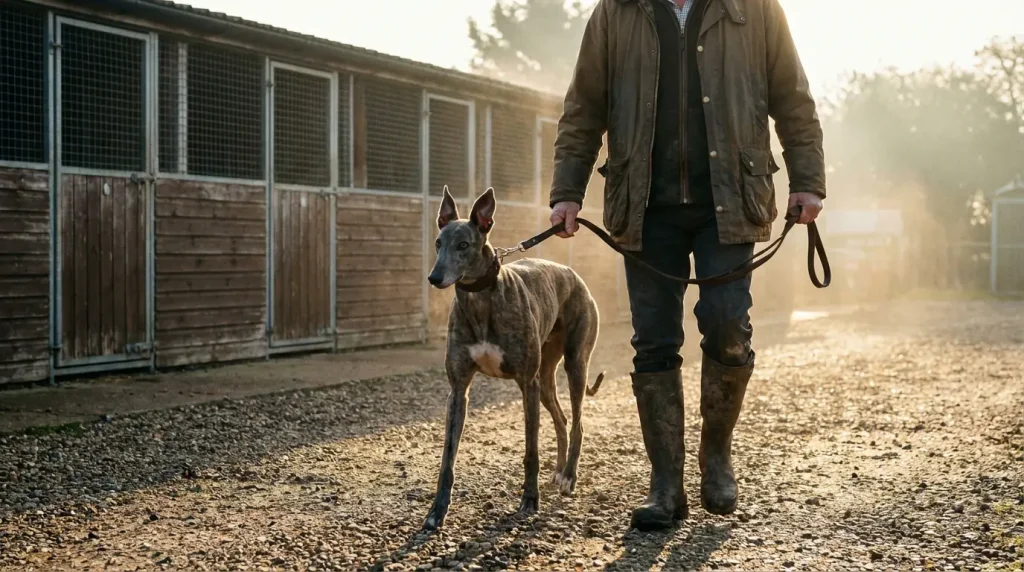
A greyhound doesn’t train itself. Behind every dog on a racecard is a trainer who decides when it runs, where it runs, what distance to enter it at, and how to prepare it for the race. Two dogs with identical calculated times and similar form figures can have entirely different prospects if one is handled by a trainer in peak form and the other comes from a kennel going through a quiet spell. Trainer analysis is one of the most underused angles in greyhound betting — not because it doesn’t work, but because the data takes effort to track and the patterns are less immediately obvious than trap draws or split times. Get more form data at crayfordgreyhound.
In horse racing, trainer form is a mainstream metric. Punters routinely check a trainer’s recent win rate, their record at a specific course, and their seasonal patterns. In greyhound racing, the equivalent analysis is less common but no less valid. Greyhound trainers have strike rates, track preferences, distance specialities and form cycles that repeat with enough regularity to be useful. The difference is that greyhound trainer data is harder to access and rarely presented in a convenient, pre-packaged format. You have to build the picture yourself.
Why Trainer Form Matters
Greyhound training is a hands-on occupation. Trainers typically house their dogs in purpose-built kennel compounds, manage their feeding, exercise, veterinary care and race preparation directly, and make the daily decisions that determine whether a dog arrives at the track in peak condition or slightly below par. A good trainer can improve a moderate dog’s performance through careful management; a struggling trainer can undermine a talented one through poor preparation, ill-timed entries or simple neglect.
Trainer form cycles are real and observable. A kennel operating at peak efficiency — healthy dogs, good staffing, effective routines — will produce a higher-than-average win rate across its runners for a sustained period. When something disrupts the operation — illness running through the kennel, a key staff member leaving, a change in feed supplier, or simply the natural ebb of a cohort of dogs ageing out of competition — the win rate drops. These cycles last weeks or months, not days, which makes them trackable for anyone willing to monitor the data.
The effect is most pronounced in graded racing. In open and Category One events, the quality of the individual dog dominates. In a standard A5 race on a Tuesday evening, the margins between the six runners are smaller, and the preparation edge that a well-run kennel provides can be the difference between first and fourth. This is where trainer form analysis earns its keep: in the everyday bread-and-butter races where the form figures are close and an external factor is needed to separate the contenders.
Strike Rates and Track Preferences
A trainer’s strike rate is the percentage of their runners that win over a given period. The baseline varies — a trainer with a large string of dogs running multiple times per week will naturally have a lower headline strike rate than a trainer with a smaller, more selective operation — but the trend matters more than the absolute number. A trainer whose strike rate has risen from 15% to 22% over the last three months is managing their dogs well. One whose rate has dropped from 20% to 10% has something going on that the form figures may not yet reflect.
Track preferences are particularly relevant. Most UK greyhound trainers are based near their primary track and race the majority of their dogs there. A Sussex-based trainer will run most of their runners at Hove. A trainer in the Midlands might focus on Monmore or Perry Barr. Their knowledge of the home track — the surface nuances, the bend characteristics, the grading manager’s tendencies — gives them an edge over visiting trainers. When a trainer sends a dog to an away track for an open race, the adjustment challenge applies to the trainer as well as the dog.
Distance speciality is another angle. Some trainers develop a reputation for producing effective stayers — dogs that perform well over 600 metres and beyond. Others specialise in sprinters or have a track record of producing sharp early-pace dogs. These specialities often correlate with the trainer’s breeding programme or their preferred training methods. A trainer who consistently produces good split times from their runners is doing something right in the preparation phase, and that pattern tends to persist.
Kennel Moves and Their Impact
When a greyhound changes trainer — a kennel move — it introduces uncertainty into the form assessment. The dog’s entire environment changes: new kennel, new feeding routine, new exercise programme, potentially new distances and a new home track. Some dogs improve immediately after a kennel move, responding positively to the change in management. Others take weeks to settle, producing a string of below-par performances while they adjust.
For punters, a recent kennel move should be treated as a form reset. The dog’s previous form was produced under different conditions and may not be reproduced at the new kennel. The first few runs after the move are diagnostic: they tell you how the dog is adapting, whether the new trainer’s methods suit it, and whether the switch is likely to be positive or negative.
Kennel moves sometimes signal a deliberate upgrade in management. An owner who moves a promising young dog from a mid-tier kennel to a top trainer is investing in the dog’s potential. If the top trainer has a record of improving transferred dogs — bringing them through the grades more quickly, producing faster calculated times — the move itself is a positive signal. Conversely, a dog moving from a strong kennel to a weaker one may be declining, with the original trainer deciding the dog is past its best and no longer worth the resources of a high-quality operation.
The key data point is performance before and after the move. If a dog’s calculated times improve by 0.10-0.20 seconds in its first three or four runs at the new kennel, the move is working. If the times deteriorate or the dog shows signs of unsettlement — erratic running, slow breaks, inconsistent form — the adjustment is not going well. Either way, the first two or three runs at the new kennel are unreliable as form guides for future betting.
Where to Find Trainer Data
Trainer statistics are not presented as prominently in greyhound racing as they are in horse racing. There is no equivalent of the horse racing trainer-form tables that appear on every racecard and in every racing newspaper. But the data exists, and it can be assembled from several sources.
The GBGB website publishes results from all licensed UK tracks. By filtering results by trainer name, you can build a win-rate history for any licensed handler. The process is manual — there is no one-click trainer form table — but the data is there. Third-party results databases and racing data services offer more structured access. Some provide trainer-level statistics including win rates by track, distance and grade, updated after each meeting.
Timeform, which provides greyhound ratings and analysis, includes trainer data within its wider form assessment tools. Their ratings factor in trainer form alongside the dog’s individual performance, giving a composite picture that includes the kennel’s recent trajectory. For punters who subscribe to data services, Timeform’s greyhound product is one of the more comprehensive options available.
The low-tech approach works too. Follow a specific track — Romford, Hove, whichever venue you bet on most — and note which trainers are winning regularly. Over a few weeks of observation, the in-form kennels become obvious. A trainer whose dogs are winning two or three times per meeting is in a hot streak. One whose runners are consistently finishing fourth and fifth is not. The observation doesn’t require a database; it requires attention. Also explore our greyhound form guide.
The Handler Behind the Dog
Greyhound racing puts the dog’s name on the racecard in large print and the trainer’s name in small print. The weighting should arguably be reversed. The trainer determines the dog’s condition, selects its races, and prepares it for competition. A dog is only as good as its management allows it to be on any given night. Factoring the trainer into your form assessment does not replace the other variables — trap draw, pace, grade, going — but it adds a dimension that most punters ignore. And in a sport where margins are measured in fractions of a length, any dimension you can add is a dimension worth having.
