Greyhound Track Conditions: Going and Its Impact
 Available in US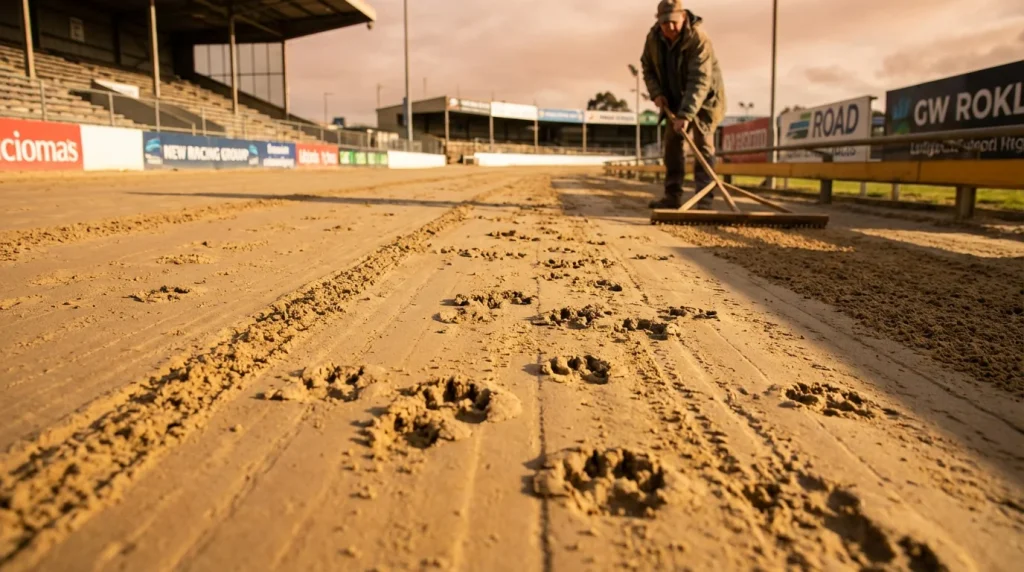
Track conditions change between meetings, between races, and sometimes between the first and last event on the same card. Rain slows the surface. A dry spell hardens it. Temperature affects the sand’s density. None of this is visible to the bettor watching from a screen, yet it directly influences finishing times, form reliability, and the accuracy of any comparison between one run and the next. In greyhound racing, the surface is the silent variable — always present, rarely discussed, and frequently the reason a dog’s performance doesn’t match its recent form. Get more race analysis at crayfordgreyhound.
The going — the official assessment of the track surface at the time of racing — exists precisely to account for this variability. It is measured before each meeting, expressed as a numerical correction, and applied to every race’s timing data. Without it, comparing a dog’s time from one evening to the next would be meaningless, because the track itself is a moving target. With it, the comparison is still imperfect, but it is at least grounded in a standardised framework. Understanding how the going works, and how to use it when evaluating form, is one of those quiet edges that separates informed punters from everyone else.
What Going Means in Greyhound Racing
In horse racing, the going is described with words: good, soft, heavy, firm. In greyhound racing, the going is a number. It represents the difference between the track’s current running conditions and its standard baseline — the speed at which dogs would run if the surface were in its ideal, default state. The going is calculated by running a trial greyhound — or a set of trial dogs — before the meeting and comparing their times to the known standard for that specific track.
The resulting figure is expressed as a positive or negative number. A going of zero means the track is running at its standard speed. A positive going — say +15 — means the track is slow: conditions are adding time to every run, typically because the surface is heavy from rain or freshly laid sand. A negative going — say -10 — means the track is fast: conditions are subtracting time, usually because the surface is firm and dry.
The units are based on the track’s timing system, and the number represents how many hundredths of a second the conditions are adding or removing per race. A going of +20 at a track where the standard 415m time is 25.50 seconds means the track is approximately 0.20 seconds slower than normal. The dog’s raw finishing time of 25.70 seconds is therefore adjusted to a calculated time of 25.50 to reflect what it would have run under standard conditions.
Each track establishes its own baseline and measures its own going independently. The going at Romford has no direct relationship to the going at Hove on the same evening, because the tracks have different surfaces, different circumferences, and different standard times. The going is track-specific, meeting-specific, and sometimes updated within a meeting if conditions change significantly — heavy rain during the card, for example, might prompt a revised going figure for the later races.
Positive, Negative and Normal Going
Positive going — slow conditions — typically results from moisture in the surface. After rain, the sand absorbs water and becomes heavier, offering more resistance to the dogs’ paws and reducing their ability to grip and push off efficiently. On a wet evening at any UK track, the going might climb to +20 or higher, adding a measurable amount of time to every run. Dogs with a powerful, driving action can handle slow going better than lighter-framed animals, because the physical demands of pushing through heavy sand favour strength over agility.
Negative going — fast conditions — usually occurs during dry, warm periods when the surface has been rolled or packed to a firm consistency. The sand offers less resistance, paws grip more efficiently, and dogs complete the course more quickly than the standard baseline. Fast going tends to favour lighter, more athletic dogs that benefit from a firmer surface, and it often produces quicker split times at the first bend because every dog’s initial acceleration is enhanced by the reduced resistance underfoot.
Normal going — close to zero — is the condition that track managers aim for. It represents the optimal balance between grip and speed, and it produces the most reliable timing data for form comparison. Most meetings at well-maintained tracks fall within a range of -10 to +15. Anything outside that band suggests conditions that are materially different from the norm, and form recorded on those nights should be treated with additional caution.
The impact of going is not uniform across all dogs. Some greyhounds are genuine slow-going specialists: they may not post the fastest times on a standard surface, but when the track rides heavy they maintain their speed while others slow down, producing relatively strong performances. The reverse is true for fast-going dogs. Trainers are generally aware of their dogs’ going preferences and will sometimes withdraw a runner from a meeting where conditions are unfavourable, though this is not always possible in graded racing where entries are allocated by the racing manager.
How Calculated Time Adjusts for Conditions
Calculated time is the adjusted finishing time that accounts for the going. It is the number that allows fair comparison between races run on different nights under different conditions. The calculation is simple: the dog’s actual finishing time minus the going correction equals the calculated time. If a dog finishes in 25.80 seconds and the going is +20, its calculated time is 25.60. If the going is -10, the same raw time produces a calculated time of 25.90.
This adjustment is applied uniformly to every runner in every race at the meeting. The going correction does not vary by individual dog — it is a blanket figure that represents the overall surface speed. This is a limitation worth understanding. A going of +20 affects a heavy, powerful stayer differently from a light sprint specialist, but the correction treats them identically. In practice, this means that calculated times are more reliable for dogs whose running style and physique are close to the average. For outliers — very heavy dogs on soft going, very light dogs on firm going — the calculated time may overstate or understate their true performance.
Despite this imperfection, calculated time remains the standard currency of greyhound form analysis. When a racecard lists a dog’s recent runs, it typically shows both the actual time and the calculated time. Experienced punters focus on the calculated time for cross-meeting comparisons and on the actual time only when assessing what happened within a single race — relative to the dogs it competed against, where the going correction is irrelevant because all six runners experienced the same conditions.
The going also feeds into the grading system. Racing managers use calculated times to assign and adjust grades, so a dog that posts a slow actual time on a heavy surface will not be penalised in grading if the calculated time is consistent with its current level. This means that a night of slow going should not, in theory, distort a dog’s grade trajectory — though in practice, extreme conditions can produce calculated times that are slightly less reliable than those generated under normal going, because the correction formula is a linear approximation of what is not always a perfectly linear relationship.
For punters studying a dog’s form line, the practical advice is straightforward. Use calculated times for comparison between meetings. Note the going at each meeting — it appears on the racecard or in the results archive — and flag any runs where the going was extreme (above +25 or below -15). On those occasions, treat the calculated time with a little more scepticism than usual. The adjustment handles moderate variation well. It handles extreme conditions adequately. It does not handle them perfectly.
Betting with the Going in Mind
The going creates two types of betting opportunity. The first is identifying dogs with a known going preference running on a surface that suits them. A greyhound whose best runs have all come on slow going is worth upgrading when the track is riding heavy, even if its recent calculated times look ordinary. Conversely, a dog that produces its quickest calculated times on fast going may be vulnerable on a wet night, and its short price might not reflect the added risk.
The second opportunity is more subtle: recognising when the market has failed to adjust for the going in a recent run. A dog that finished sixth on an evening with extreme slow going might have its price inflated because the result looks poor. But if the calculated time was reasonable and the bend positions show it ran cleanly, the going rather than the dog’s ability might explain the finishing position. The next time that dog runs on a standard or fast surface, it could bounce back sharply — and its odds may not reflect that prospect because the market is reacting to the raw result rather than the adjusted data.
Checking the going is a ten-second task that should be part of every form assessment. It costs nothing, requires no sophisticated model, and occasionally reveals a mispricing that the raw numbers conceal. Also read our early pace guide.
The Surface Is Invisible Until It Isn’t
You cannot see the going from a betting shop screen or a live stream. There is no visual cue that the track is two-tenths of a second slower than it was on Tuesday. The dogs look the same, the traps sound the same, the race unfolds at the same speed to the naked eye. Only the clock reveals the difference, and only the going correction explains it. Ignoring it is easy. Accounting for it is the kind of marginal discipline that separates form analysis from form-watching — and marginal disciplines, in betting, are where the margins live.
