Best Odds Guaranteed for Greyhound Racing UK
 Available in US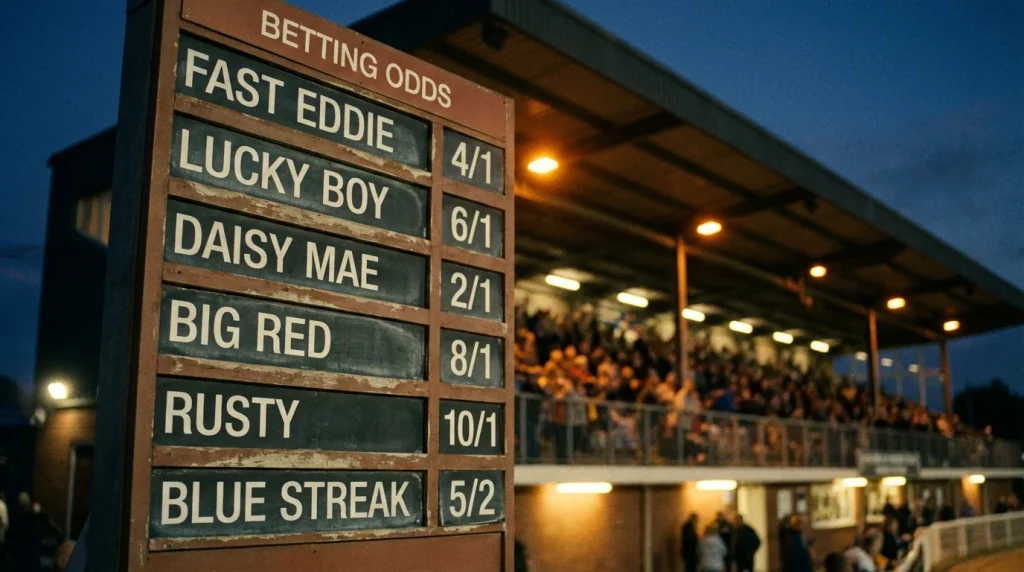
Best Odds Guaranteed is the closest thing greyhound punters have to a free safety net — and yet a surprising number of bettors either don’t know it exists or don’t understand how it works. The concept is simple: you take a price on a greyhound before the race, and if the starting price (SP) drifts higher than the odds you took, the bookmaker pays you at the bigger number. If the SP is the same or shorter, you get the price you originally accepted. You can only win from the arrangement. The bookmaker absorbs the downside. Find more value guides at crayfordgreyhound.
BOG, as it is universally shortened to, removes one of the oldest dilemmas in greyhound betting: whether to take the early price or wait for the SP. Before BOG became widespread, punters had to gamble on the market itself — taking an early price risked missing a drift, while waiting for the SP risked the price shortening. BOG makes the timing question irrelevant, at least on the surface. But there are conditions, limitations, and practical nuances that determine how much value the promotion actually delivers.
How BOG Works
The mechanics are straightforward. You place a win bet on a greyhound at fixed odds — say 5/1 — before the race starts. The market continues to move as other punters place their bets. By the time the traps open, the SP has settled at 7/1. Under BOG terms, your bet is paid out at 7/1 instead of 5/1. You took the early price, but you are rewarded at the starting price because it was higher.
If the SP had contracted to 4/1, your bet would still be settled at your original 5/1. BOG only enhances your odds; it never reduces them. The bookmaker is guaranteeing that you receive the best of either your taken price or the SP, whichever is greater.
BOG applies to win bets and sometimes to each-way bets, depending on the bookmaker’s specific terms. It does not typically apply to forecast, tricast, or other exotic bet types. The promotion usually covers races at GBGB-licensed UK tracks and often extends to selected Irish meetings, though the track list varies by operator. Some bookmakers apply BOG automatically to all qualifying greyhound bets; others require you to opt in or use a specific section of their site or app.
The window during which BOG is active also matters. Most bookmakers only honour BOG on bets placed after racecards are published and before the race starts. Bets placed too early — before the official card is available — may not qualify. Similarly, bets placed at SP (rather than at a fixed price) are ineligible because there is no early price to compare against.
Which Bookmakers Offer BOG on Greyhounds
BOG for greyhound racing is less universally available than its horse racing equivalent. In horse racing, virtually every major UK bookmaker offers some form of best odds guaranteed on selected meetings. In greyhound racing, the coverage is patchier. Some operators offer BOG on all UK greyhound races, others restrict it to selected tracks or selected meetings, and a few don’t offer it on dogs at all.
The major UK bookmakers that have historically offered greyhound BOG include several of the largest licensed operators. The specifics change frequently — promotions are updated, terms are revised, tracks are added or removed from the qualifying list — so relying on a static list is inadvisable. The most reliable approach is to check the current terms on each bookmaker’s greyhound racing section before placing a bet. Look for a “Best Odds Guaranteed” label or badge on the racecard page. If it’s there, you’re covered. If it isn’t, assume BOG does not apply.
Some bookmakers restrict BOG to bets placed through specific channels. A bet placed via the app might qualify while the same bet placed in a retail shop does not, or vice versa. The rationale is commercial — online bets have different cost structures for bookmakers than over-the-counter bets — but the effect for the punter is that you need to read the terms carefully rather than assuming blanket coverage.
It is also worth noting that BOG is a promotional tool, not a regulatory requirement. Bookmakers can withdraw it at any time, modify the qualifying tracks, or cap the maximum payout enhancement. The promotion’s continued availability depends on its commercial value to the operator — if it attracts or retains enough customers to justify the cost of paying out at higher prices, it stays. If it doesn’t, it goes. The greyhound version of BOG has always been more precarious than its horse racing counterpart for this reason: the greyhound betting market is smaller, the margins are tighter, and the promotional budget is correspondingly leaner.
BOG vs Taking SP vs Early Price
Without BOG, the choice between taking an early price and leaving your bet to SP is a genuine strategic decision. Early prices are available from the moment racecards are published, often hours before the race. These prices reflect the bookmaker’s initial assessment of each dog’s chance, based on form, trap draw, and market expectations. As bets flow in, the prices adjust — popular dogs shorten, unfancied dogs drift.
Taking an early price locks in your odds. If you believe the dog’s price will shorten as the race approaches, taking the early price captures the value before the market corrects. This is the classic value-betting approach: identify a mispriced dog, take the inflated odds, and let the market move without you. The risk is that the price drifts — becomes longer — and you’ve locked in an inferior number.
Leaving your bet to SP avoids the risk of missing a drift but introduces the opposite risk: the price might contract. An SP bet settles at whatever the starting price turns out to be, which you won’t know until the race is about to start. For favourites, the SP is often shorter than the early price because money flows towards the expected winner as the race approaches.
BOG eliminates this tension. Take the early price. If it was a good decision, you keep it. If the SP was better, you get the SP instead. The only scenario where BOG doesn’t help is when you would have left the bet to SP anyway — in that case, BOG is irrelevant because you never took a fixed price in the first place. For punters who actively study form and identify value early, BOG is a material advantage. It turns the act of taking an early price into a no-downside proposition on the odds side, which is a rare thing in any form of gambling.
Limitations and Fine Print
BOG is not unconditional generosity. Bookmakers set limits on the promotion that are worth understanding before you rely on it.
Maximum payout enhancements are the most common restriction. Some operators cap the additional payout from BOG at a set figure — for example, the enhancement might be limited to an additional fifty pounds. If your bet was placed at 5/1 with a hundred-pound stake and the SP drifted to 8/1, the full BOG payout would be eight hundred versus the five hundred you were originally in for — a three-hundred-pound enhancement. If the cap is fifty pounds, you’d receive five hundred and fifty rather than eight hundred. Caps like these are most relevant for larger stakes; small-stake punters rarely hit the ceiling.
Track restrictions apply at some bookmakers. BOG might cover selected BAGS meetings (the Bookmakers Afternoon Greyhound Service, which provides morning and afternoon racing for the betting shop network) but not evening cards, or vice versa. The distinction reflects the commercial dynamics of different meeting types: BAGS meetings generate high betting volumes through shops and streaming, while evening meetings may attract a different profile of bettor.
Non-runners and trap changes can complicate BOG settlements. If a dog is withdrawn and a reserve replaces it, the terms may differ. Always check how the bookmaker handles non-runner scenarios under BOG — some void the enhancement entirely, others apply it to the replacement dog’s SP. Also explore our greyhound odds guide.
The Free Insurance That Isn’t Free
BOG costs you nothing directly. There is no fee, no surcharge, no reduced odds in exchange for the guarantee. But the cost is embedded elsewhere. Bookmakers that offer BOG factor the expected cost of the promotion into their overall odds compilation. Prices across the board might be fractionally shorter than they would be at an operator that doesn’t offer BOG, because the bookmaker needs to fund the promotion from somewhere. Whether this hidden cost is outweighed by the visible benefit of the guarantee depends on how often the SP exceeds your taken price — and by how much. For punters who consistently identify value early, BOG is a net positive. For those who bet randomly, it’s a marketing badge that rarely triggers. The insurance is real. The question is how often you actually need it.
